
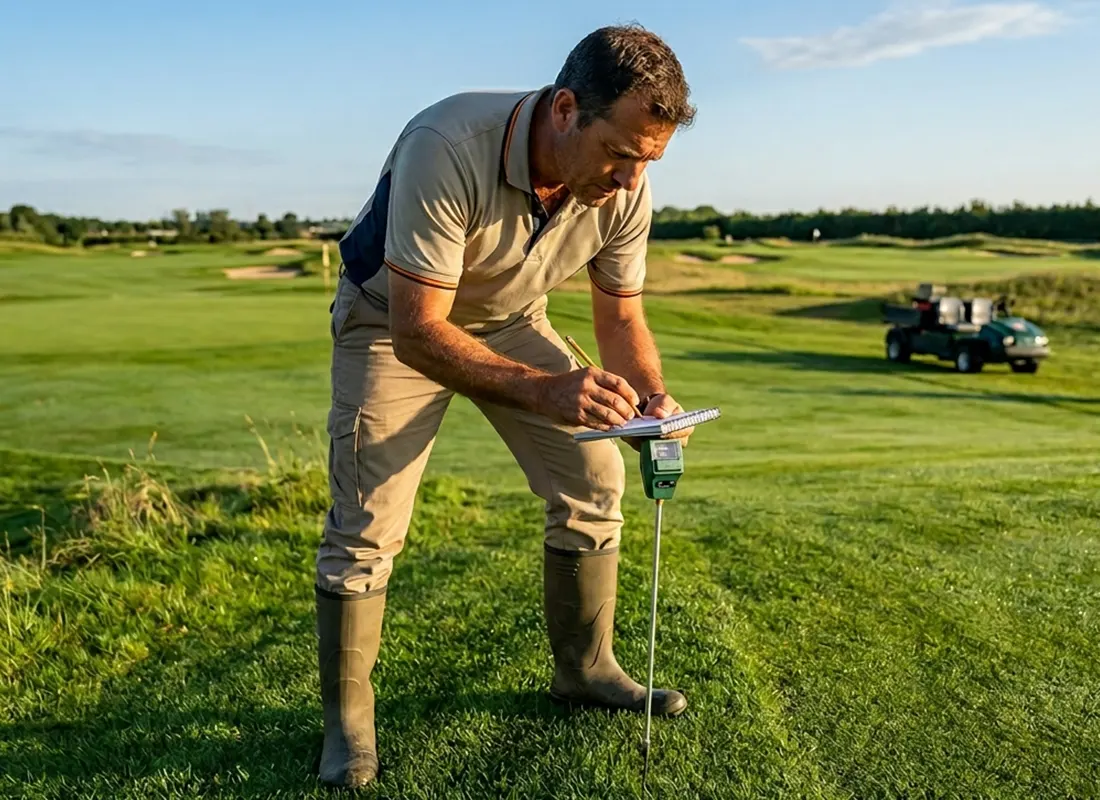
The Green Section of the Royal Spanish Golf Federation It is the technical department specializing in aGronomy and golf course maintenance. Their work encompasses advising, training and research, as well as promoting new techniques and sustainability criteria in the sector.
A significant part of their work is carried out with public and social fields,where it provides technical advice to improve management and maintenance, optimize resources and move towards models efficient, sustainable and economically viable.
She also works in the agronomic preparation of the fields that host RFEG championships and competitions,adapting the playing surfaces to the needs of each event.
The research and innovation They also occupy an important place. The Green Section participates in studies related to the efficient use of water, plant health, and new technologies applied to maintenance. National Golf Centre It acts as a demonstration field and testbed, allowing the evaluation of new techniques and the subsequent transfer of results to other facilities.
In 2025, The Green Section advised 20 facilities, participated in 6 research studies, provided agronomic services to 30 fields during the RFEG championships and collaborated in 10 construction projects.
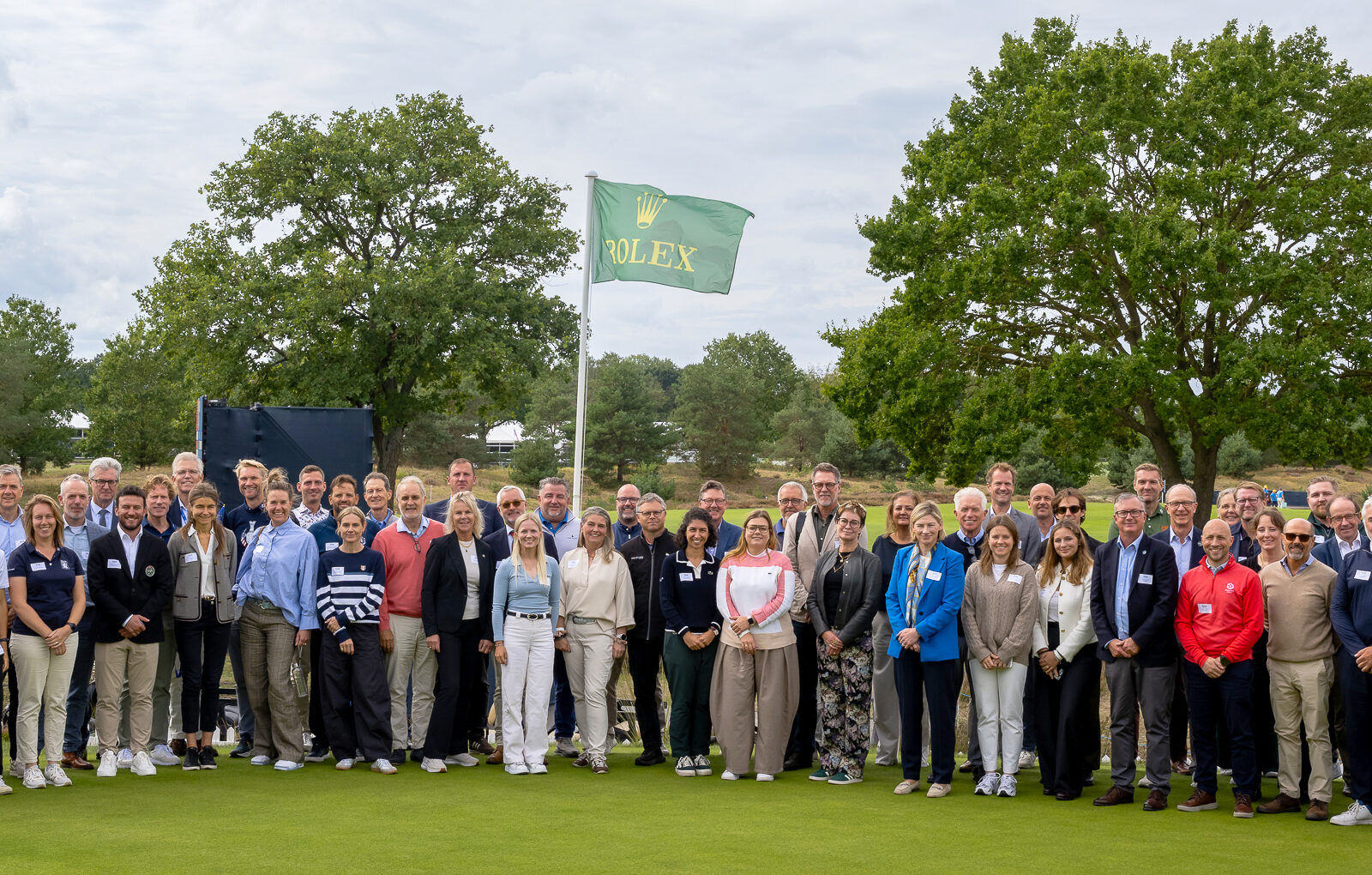
The training was completed with 21 conferences, seminars and courses in Spain and other countries, including the AEdG Congress and meetings related to the GCSAA, The R&A and the EGA. Furthermore, it maintains training and collaboration channels with Michigan State Penn State University (United States) y SRUC Elmwood (Scotland).
Sustainability Reports
Memoirs
21/09/2026

17/06/2026
26/05/2026
19/05/2026
DOLLAR SPOT STUDY: Under the subsidy of the R&A, the Green Section and the
University of Seville, in collaboration with the Spanish Greenkeepers Association and the
Spanish Association of Golf Courses, carries out a study of the genetics of the pathogen that causes the
disease "“Dollar Spot”, with the aim of better understanding how to control it.
DIGITAL GREEN: Software for sustainability management in golf courses. Sustainability Tool
free of charge available to Golf Courses in Spain. It demonstrates environmental benefits: absorption of
CO₂, biodiversity, and mitigation of climate change.
ARTIFICIAL GREEN PROJECT: The project and the various tests focus on the search for
materials for implanting a artificial turf green that meets the necessary requirements,
Regarding natural grass and overcoming certain limitations, particularly in aspects related to the
rollability and the ball reception.
It is the distance a golf ball rolls after sliding down a device called a Stimpmeter. This instrument is a slotted bar, 90 centimeters long, used to roll a ball across a green at a constant and reproducible initial speed. The procedure for its use is regulated by the USGA (United States Golf Association) and consists of several steps:
1. Choose an area of the green with a reasonably flat surface
2. Hold the Stimpmeter by the grooved side, place the ball in it, and slowly lift it until the ball comes loose and rolls in the direction you've chosen. Repeat this procedure with the other two balls. The throwing area is marked with a tee.
3. A second tee is inserted at the midpoint between the three balls. Therefore, the distance between the two tees would be the measurement of the first set.
4. Repeat step 2, using the second tee as the starting point and the first tee as the target. That is, roll a series of three balls along the same line, but in the opposite direction.
5. Repeat step 3, establishing the average distance of the second series of balls.
6. The distance of the first and second series is measured and the average is calculated. This final measurement is what we record as the Green speed.
The speed of a green is measured in feet, and according to the USGA, the different green speed categories for competitions are as follows:
Over 9.5 feet (2.89 m): Fast greens
Between 8.5 – 9.5 feet (2.59 -2.89 m): Medium Greens
Under 8.5 feet (2.59 m): Slow greens
The amount of water consumed by a golf course is not an exact figure, as it depends on numerous variables such as grass variety, soil type, course design, climate, maintenance intensity, level of system automation, etc. However, an average consumption figure can be given, around which needs will increase or decrease depending on the variables described above. As an average, it is estimated that in Spain, the water consumption of an 18-hole golf course with 1 hectare dedicated to greens and another to tees is 7,500 m³ per hectare per year.
This scholarship offers specialized training in Turfgrass Management Program in the
Michigan State University (MSU) or in the Pennsylvania State University (PSU),
with the aim of training specialist technicians in the maintenance of golf courses and grass sports surfaces.
Select the RFEG department you would like information about.
Director of Green Section
David Gómez Agüera
Attached address
Luis Manuel Casado García
Greenkeeper
Diana Bango Cascón
Greenkeeper
Juan Muñoz Puro
Greenkeeper
Miguel Guerra Mateos
Formation of municipal fields
• Training for greenkeepers or those in charge of courses directly managed by the RFEG. Preparation of maintenance schedules and budget monitoring.
Formation of private fields
• Development of private courses not directly managed by the Royal Spanish Golf Federation. Monthly maintenance and monitoring schedule.
Construction and Renovation Consulting
• Advice and supervision of various golf courses in the project or construction phase in which the Royal Spanish Golf Federation is involved, as well as those of public initiative.
Tournament Consulting and Preparation
• Conducting regular site visits before the tournament and preparing reports on these visits. Providing technical support throughout the week of the tournament.
Environment
The Green Section Department of the RFEG (Royal Spanish Golf Federation) is characterized by its ongoing pursuit of sustainability on golf courses, an ambitious goal that can be extended to the entire community of greenkeepers in Spain. The RFEG considers sustainability a key priority for golf, protecting nature, conserving resources, and providing a surface with the best conditions and guarantees for playing the sport. This proposal addresses the priority themes of the Action Plan for the "Golf Course 2030 Spain," particularly regarding water usage restrictions, restrictions on the use of plant protection products, and energy consumption. Research projects are being carried out with leading universities. Training courses are offered, and collaborations with various organizations include seminars and conferences. Several publications, including books and case studies, have been produced, all focused on improving the maintenance sector. Always with the cooperation of entities such as the Spanish Greenkeepers Associations, the Spanish Association of Golf Courses, the EGA, the R&A, etc., and with continuous training and the training of future professionals through scholarships offered by the RFEG.
To contact our department, please send a message to this email address: green.section@rfegolf.es