

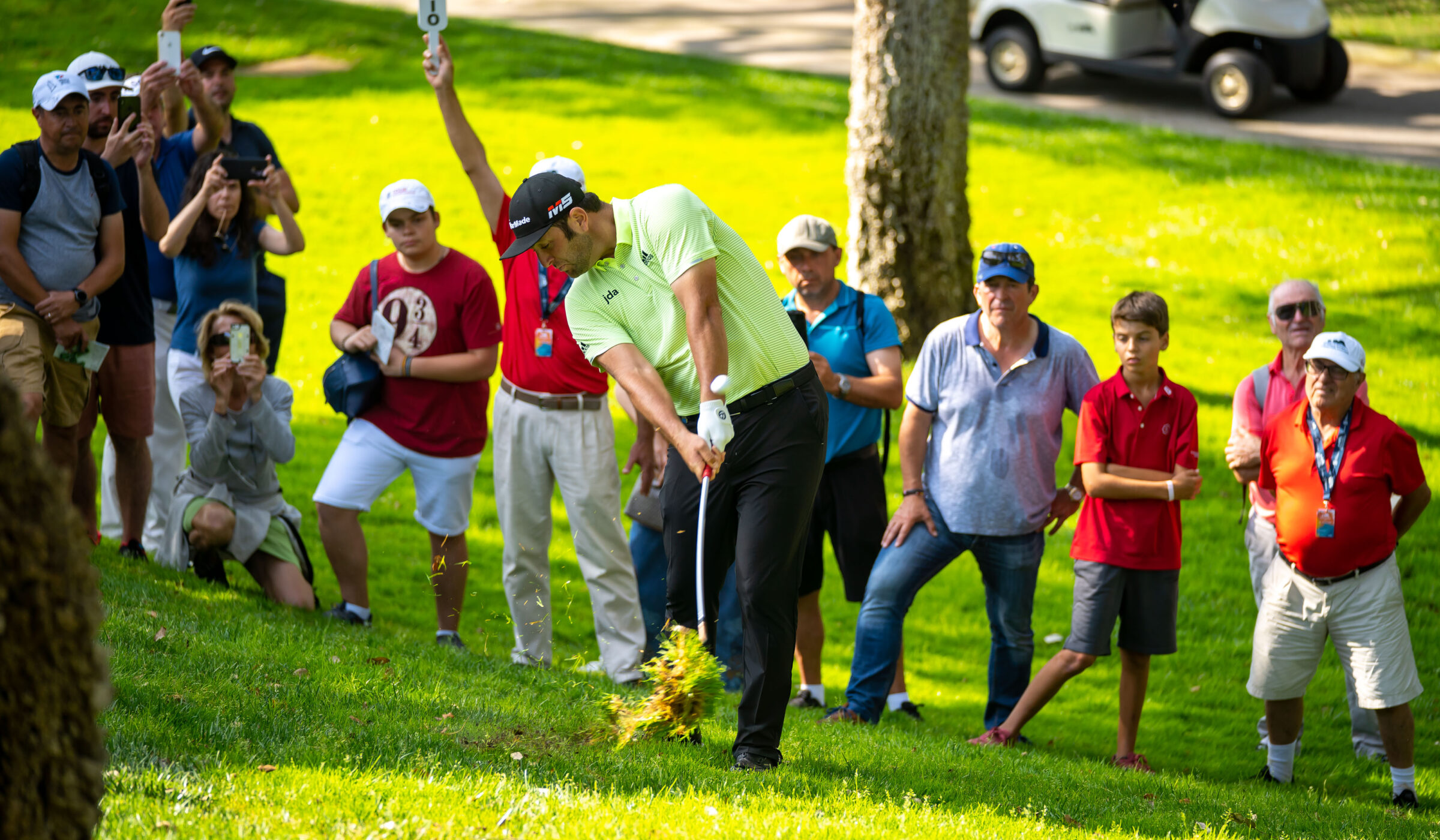
If we look at the best golfers on the world's top professional tours, we can see that what makes the difference between winning or being at the top of the leaderboard is their mindset, their feelings, and their belief in themselves during those crucial moments of competition. Let's see what makes them different and what we can learn from them.
1. Dreams and an infinite desire to fulfill them
From a very young age, Tiger Woods knew his goal: to surpass Jack Nicklaus's 18 Grand Slam victories. When he began his career, few believed he had a chance of achieving it. Regardless of whether he succeeds or not—and we wish him a speedy recovery after his recent serious car accident—what we can learn is that the best players always have a goal, sometimes a dream or something seemingly unattainable, and an enormous desire to achieve that dream, which transforms into enthusiasm, motivation, and commitment in their daily training.
2. Concentration – being in the present
In moments of high pressure, it's very easy for the mind, the thoughts, to wander to the future, to the outcome of the shot, or to past mistakes, especially on short putts. If, during the mental process of the pre-shot routine, the player can't get the outcome of the shot out of their head—whether the ball will land in the fairway or not, or whether they'll sink the putt or not—they'll be losing sight of the shot they want to make.
Use all your attention from hole 1 to 18 to concentrate on the present, on what you need to do at each moment, instead of on what you have done before, on what is yet to come.
3. Play "to hit good shots" instead of "not to miss"“
Great players aren't content with simply "not missing the shot"; they have the image of the shot they want to hit in their minds, not the shot they "don't want to hit." When a player thinks about hitting a good shot, their mind focuses on where they want to send the ball, whereas when they think about not missing the shot, they're more concerned with where they don't want to send the ball.
Decide on the shot you want to hit, taking into account your abilities and skills, and knowing that a good shot isn't always a driver or going for the pin. Sometimes the best shot will be hitting the ball down the middle of the green and forgetting about the pin, while other times it will be aiming for the pin.
You can take a bold approach and aim for the center of the green, a conservative strategy, or you can attack a corner pin out of sheer fear. Always maintain a bold attitude and adapt your strategy to the circumstances of the game.
4. Emotional control
Great players have excellent control over their emotions, which doesn't mean they don't get angry or that they repress their feelings and keep them bottled up inside. It's about knowing how to channel them so they don't affect their concentration or decision-making, especially under intense pressure.
Whether we succeed, make mistakes, or are poised to win a tournament, we inevitably generate emotions that are impossible not to feel. In all these cases, it's about knowing how, when, and in what way you can express them so that they never work against you.
5. They face mistakes with confidence
Mistakes are part of golf, and those who can deal with mistakes while maintaining their confidence and concentration on the following shots have a significant advantage over the rest.
Sometimes, after missing a couple of short putts or a couple of drives, we find ourselves lacking confidence in the following putts or remembering the previous mistakes on the tee, which greatly hinders concentration and determination in the shot.
The first reaction after missing a shot will be a certain amount of discomfort. Nobody likes to miss, but great players train their post-shot routine to maintain control after mistakes.
In this post-hit routine they usually include a deep breath after the mistake, briefly analyze, for four to five seconds, the mistake made and usually say to themselves some phrase or self-talk that helps them return to the present as the "next hit".
From that moment on, your mind refocuses on what you need to do on the next shot, leaving the mistake behind. Practice this post-shot routine and you'll see how much easier it is to control the situation and learn from your mistakes.
By Óscar del Río
RFEG Sports Psychologist





 (13)-1600x1200.jpg)