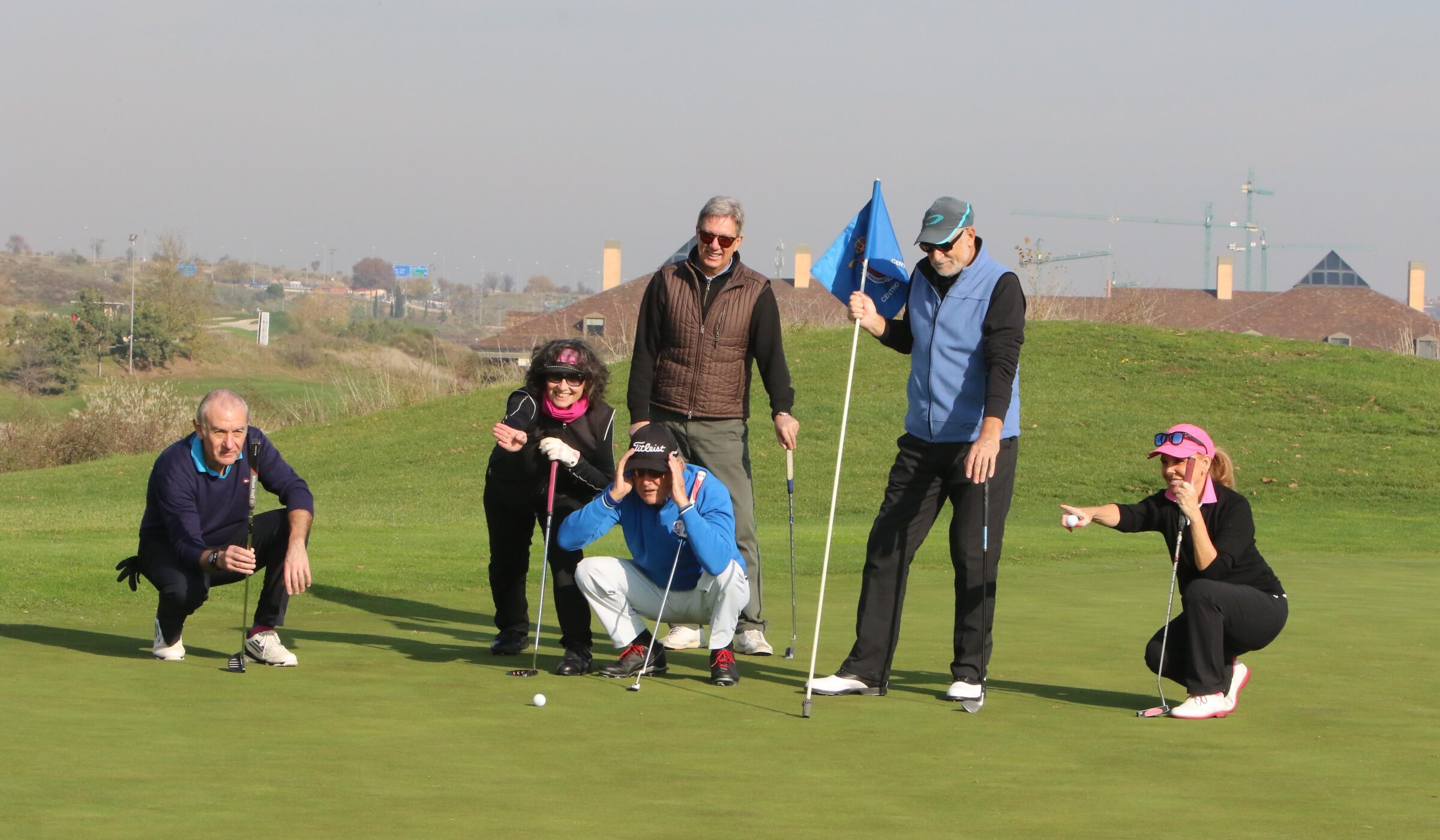
One of the many advantages of our sport is that you can enjoy it and be just as competitive at twenty, forty, or sixty years old, because golf isn't a matter of age, but of attitude. Let's look at some key points to continue enjoying the game and remaining competitive regardless of age.
Good competitors are those who know how to get the most out of the weapons and resources they have at their disposal at any given time. Therefore, to be competitive, the first thing to do is to know yourself, to know what weapons you have in your arsenal to face the challenges of competition.
Obviously, a player's skills and qualities vary depending on years of practice, competitive experience, and, of course, age. But the first key to staying competitive, regardless of age, is knowing your resources, your strengths and weaknesses, and knowing how to use them on the course to maximize performance and take as few strokes as possible.
This principle may lead us to make adjustments to our playing equipment, for example: more flexible shafts, but also to adapt our playing style to the qualities we have at this moment in order to continue making as few strokes as possible.
In the case of senior golfers, despite the evolution of golf balls and materials, it's quite common to gradually lose distance with the driver or to need to use an extra club to achieve the same distance. It's not unusual to find it difficult to accept this loss of distance, but what truly limits our competitive ability isn't the loss of distance itself, but rather the frustration of not hitting the ball as hard as we did years ago.
The competitive and decisive player, instead of lamenting the lost distance, analyzes what they can do or what skill they need to develop to compensate for it. And each player must find their own answers: for some it will be adapting their strategy, for others trying to improve at 50 meters and below. The one who takes the fewest shots wins, not the one who hits them the hardest.
On the other hand, confidence and focus also distinguish good from bad competitors. The ability to stay focused for 40-50 seconds without distractions is not something that diminishes with age.
Maintaining concentration for longer periods can indeed be affected. Therefore, what we should do is disconnect between shots to refocus a little before our turn. This way, our concentration will be optimal throughout the 18 holes.
Finally, to maintain a good level of confidence, we must monitor our self-talk and our post-shot routine. If after each shot you complain that you're hitting the driver 20 meters shorter or that you used to play an 8-iron where now you have to play a 6-iron, you're gradually eroding your confidence.
Conversely, if after each shot, even if it wasn't perfect, you can mentally tell yourself what you did well, you'll be boosting your confidence, becoming aware of your strengths and not just your limitations. And when the shot misses and there's nothing positive to say to yourself, that's when you most need encouragement and support instead of criticizing or dwelling on your mistakes.
If he succeeds, his competitive attitude will remain the same as always and, most importantly, he will be able to continue enjoying the challenge of golf regardless of his age, handicap and hitting power, because golf is a matter of attitude.
By Óscar del Río
RFEG Sports Psychologist
Related articles below, in the Related News section.