
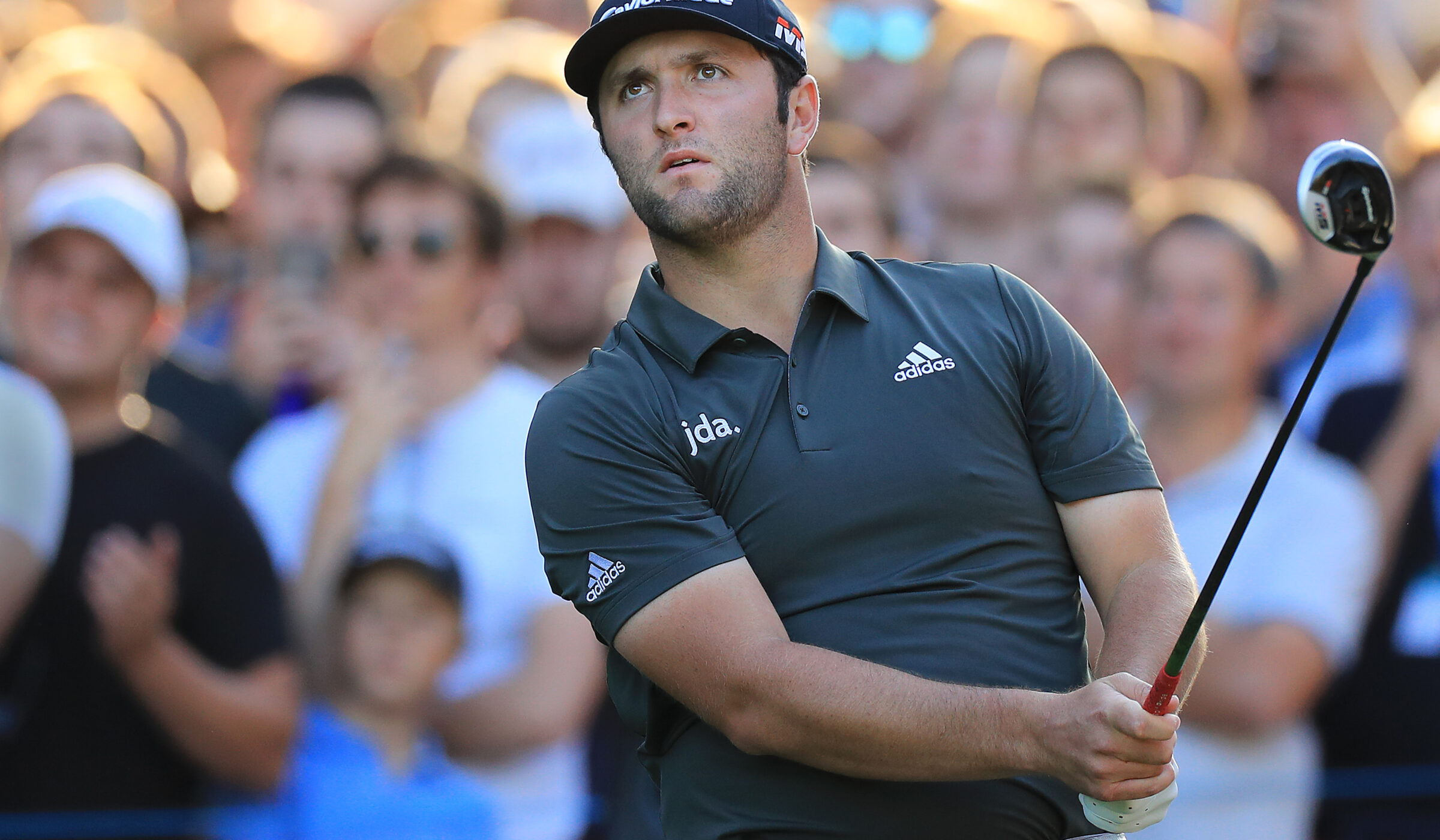
The Players Tribune, a new media platform that provides content written by professional athletes, is characterized by publishing first-person stories directly from the athletes themselves, the latest of which is from golfer Jon Rahm, titled 'A Letter to Spain'.
It says… (direct link to The Players Tribune below, in the Related Links section)
VIDEO MESSAGE OF ENCOURAGEMENT TO SPANISH FEDERATION MEMBERS
A LETTER TO SPAIN, BY JON RAHM
This is not a golf story.
This story is about my house.
And lately I've been thinking a lot about my house.
My wife, Kelley, and I are safely back home in Phoenix, and I've had a lot of time to think lately. I imagine you have too. Every day, as the news about this pandemic seems to get worse and worse, my mind drifts back to memories of my parents when I was a child.
And here's the crux of the matter: I can't tell you this story unless you understand one very important thing about Spaniards, and especially about Basques, which is the area I come from.
We are very stubborn.
I know you've already seen it in my golf game. But it's practically a way of life. If someone from my town tells you they're going to do something… you'd better believe them, because they will. That's just how we are.
A few weeks ago, when I started hearing all the talk about Covid-19 cases in Spain, I called my mother. She works as a midwife near the town of Barrika in the north. Right now, she's not on the front lines of the pandemic, but she's close enough to understand what's happening and to have a better perspective than most. More than that, she's one of us. She'll always tell me things straight.
She knew it was very serious. And she told me how critical it was going to get, so anyone who could, should stay home.
“We’re going to get through this, but everyone has to do their part,” he told me.
Sounds simple, right? But every day I see people here in the United States going about their lives as if everything is normal and—to be completely frank—acting incredibly selfishly. That's not being stubborn, that's being a fool. There's a big difference.
That was unacceptable three weeks ago. And now… it makes me furious. Because here we were, here in the United States, we had all the information right in front of our eyes. We saw what was happening around the world and we chose to continue with half-measures, with weak implementations… and now we're paying the price.
Just like Spain is paying for it now. And it breaks my heart to know what's happening there.
I am writing this to Spain, for Spain — but I hope that, wherever you are reading this, you can take something away from it.
The road ahead will be long, and it will also be arduous, and it will require real stubbornness.
As I said, it's a trait we inherit from where I come from. It eventually reaches everyone. Whether we pass it down through generations or develop it along the way, we all have it. I think I got mine from golf. Maybe it was the 8 p.m. lessons on the course, with the old mats and the nets that ended after only 180 meters. Maybe it was the shots on artificial turf that felt like hitting on ice. Maybe it was the endless hours on the course, competing against myself, that made me who I am.
Golf gives you countless opportunities to quit. I played many sports when I was younger. Soccer, tennis, canoeing… name one and I probably tried it. But with golf… there was something different. The game is about self-improvement, about competing. Whether you keep score or not, the result always exists. And no matter how much you change, the course never changes.
The game never changes.
Golf is essentially stubborn.
It's about respect, honor, and all the other words we like to use to describe it. Yes. 100%.
But golf is also brutal. It will beat you senseless and tell you to do something else, to go play another sport, to never come back.
And also, golf in Spain is different from golf in the United States. There aren't as many clubs or private courses. In Spain, it's more about the game and the people than the experience. We didn't have golf carts or caddies. There was no alcohol on the course. We didn't have different types of grass or large practice facilities. We simply went out, grabbed our bags, and competed. And we had to finish in at least four hours, or we'd hear the people behind us.
When I went to practice, I always stayed near the coach. His name is Eduardo Celles, and his place holds some of my fondest memories of the sport. He had a big family, and one of his younger brothers was always at one of the shooting stations, smoking a cigarette.
At the small station (it cost three euros to use and another two for a basket of balls) there was a woman who helped with upkeep. And she was always there. Every day. She had a small dog. Since the course was in the town, you'd often see people in dress pants practicing their shots during their lunch breaks or after work, and their children playing in the bunker near the green.
That place, when I think back on it now, fills me with pride. Those are the things that clearly demonstrate what golf means to Spain. The people. The game.
I think of them, in times like these, and of everything they have done for me and for sport in my town.
But in Spain, throughout the country —and probably throughout Europe— there is no one who has changed the sport more than Seve Ballesteros.
I know, you're thinking: 'Jon, what does Seve have to do with a story about Spain during a pandemic like this?'
I can't talk about my life, my career, or my country without mentioning Seve. The 1997 Ryder Cup at Valderrama, Spain, is the reason my father finally bought me my clubs. When Seve became the first European to win the Masters in 1980, he gave golf in our country a new lease of life. I read in an article a few years ago that when Seve started playing golf in the 1960s, there were around 10,000 registered golfers in Spain. By the day he retired in 2007, there were 350,000.
Seve makes me incredibly proud to have the Spanish flag next to my name at PGA events. And with that same pride and fierceness that I use to play for myself and for Spain every week, I now need to speak to my country.
Without Seve, I wouldn't be here, with the platform I have now as a professional athlete. And I want to do the right thing with this privileged position I have.
Every time I call my parents and family home, I remember my childhood. I think about that field and the people I used to see every day. I think about the older kids telling us to keep up the pace of the game. I wonder where they are now. I hope they're okay.
I know how tough those people can be, how tough we Spaniards are. The best thing about being stubborn is how committed we can become. And I hope that's precisely what everyone is doing: staying home, social distancing, and following the health guidelines.
There's a street in Bilbao where my grandmother, my brother, and two uncles live. Their houses are only a few meters apart. They haven't seen each other in almost two weeks. That's how seriously things have to be taken. When my grandmother needs food, someone takes it to her doorstep and leaves it there. That's how it has to be.
But even in Spain, there are still not enough people who believe it.
I heard a statistic my family gave me the other day. Since the police can now issue fines for being out in public and not following quarantine protocols, in Spain there have been more fines than cases of people infected with the virus.
That's the stubbornness of the Spanish.
And it cannot continue to be so.
So I ask you all, channel that energy into what's right: stay home. Follow the guidelines. Don't think of yourselves in times like these—think of your loved ones. Your parents. And your parents' friends.
Think about our country.
If we can do that, and channel our strength into overcoming it, then we will overcome it. I know it.
Because I know what Spaniards are capable of.
SOURCE: The Players Tribune