

. The outcome of 2013, a 9-hole playoff between Raphael Jacquelin, Maximilian Kieffer and Felipe Aguilar – all three of whom will be present in Girona – remains in the tournament's records.
. Sergio García played his first professional tournament in a Spanish Open, specifically in the 1999 edition.
The outcome of the 2013 Spanish Open, which led Frenchman Raphael Jacquelin to lift the champion's trophy after a marathon 9-hole playoff, is the latest anecdote from a Spanish Open steeped in history, to the point of making it a tournament of unanimously recognized prestige.
Raphael Jacquelin – who is defending his title at the PGA Catalunya Resort – reached supreme glory after leaving behind Chilean Felipe Aguilar – eliminated on the third playoff hole – and German Maximiliam Kieffer, the last to drop out of an absolutely extreme fight that surpassed the record for playoff holes in a Spanish Open – when Eduardo Romero beat Severiano Ballesteros in 1991 – and equaled the one established on the European Tour in 1989 at the Dutch Open, when José María Olazábal achieved a similar victory after an agonizing fight with Roger Chapman and Ronan Rafferty.
The three protagonists of this extreme outcome are part of the large group of contenders for the Spanish Open, which is full of hundreds of anecdotes and is being held this year at the PGA Catalunya Resort (Caldes de Malavella, Girona) between May 15 and 18 with the main sponsorship of Reale Seguros.
Sergio García, first professional tournament in a Spanish Open
To give a concrete example, Sergio García played his first professional tournament in a Spanish Open, specifically in 1999. Since that historic day, Thursday, April 22, 1999 at the Real Club de Golf El Prat, Sergio García has forged a sensational career that has distinguished him for years as one of the best golfers in the world.
Sergio García is also one of only three Spaniards to have won the Spanish Open in the last 30 editions, a testament to the fierce competition that always surrounds this tournament. Severiano Ballesteros won three times (1981, 1985, and 1995), Sergio García in 2002, and Álvaro Quirós in 2010.
Unlike those first 25 editions – the first one took place in 1912 – when 20 Spanish victories were recorded in a tournament where only sixteen players have managed to repeat a victory throughout its history, something within reach of only five golfers in the last 46 editions, since Robert Shaw won in Neguri in 1968: Mark James, Dale Hayes, Eddie Polland, Bernhard Langer, all with two titles, and Severiano Ballesteros, with three victories, in 1981, 1985, 1995, were responsible for such a feat.
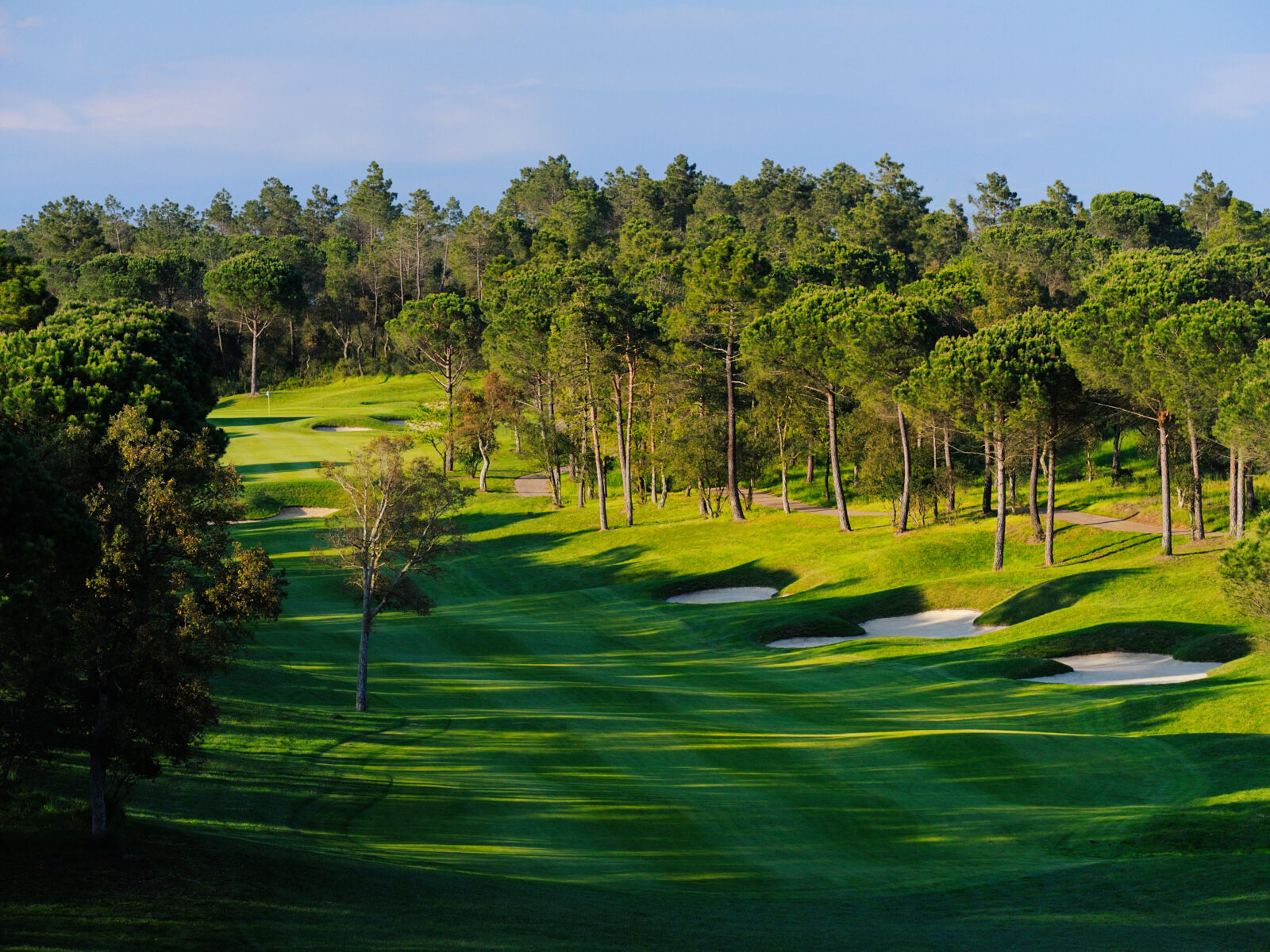
Regarding the PGA Catalunya Resort, venue for the 2014 Spanish Open, it should be noted that it has hosted this tournament on two other occasions (2000 and 2009), with victories by Englishman Brian David and Frenchman Thomas Levet, respectively.
OTHER HISTORICAL ISSUES
The widely accepted notion that the Spanish Open is the third oldest tournament in Europe requires clarification. While it's true that the Belgian Open was established in 1910, it was not played for many years, as was the German Open, whose first edition dates back to 1911, and the PGA Match Play, held in 1903 but discontinued in 1980. Therefore, the Spanish Open is considered the third oldest professional tournament in Europe.
The player who has won the Spanish Open the most times is Ángel de la Torre, with 5 titles, three of them consecutive in 1916, 1917 and 1919, since the tournament was not held in 1918. He would then win it twice more in the following decade (1923 and 1925).
– In the history of the tournament there are two editions in which the best result was achieved by an amateur: in 1947, with Mario González beating all the professionals, and in 1955, when the Count of Lamaze did the same.
The professional who has won the Spanish Open the most consecutive times was Marcelino Morcillo, with four victories between 1946 and 1949, although he didn't achieve his best result in 1947. He never won the tournament again.
The Spanish Open reached a pivotal moment in its history in 1973 when Gregory Peters took over the tournament for five consecutive years, guaranteeing a minimum of £25,000 in prize money each year that La Manga would host it. Player, La Manga's golf director, came to play in it the same year he won the 1974 Masters; Jacklin came to play while riding high on the success of his recent British and U.S. Open victories; Jerry Heard, one of the rising American stars, came on his first European tour; and Arnold Palmer himself came to ignite the passion for golf he had inspired worldwide, ultimately taking the victory in a thrilling finish…
The lowest score in the tournament's history was set by Mark James in 1988 in Pedreña (Santander), with a total of 262 strokes. It should be noted that the course was played at a par 70. Conversely, the highest score to win was achieved in 1972 by Antonio Garrido, who won in a playoff against Valentín Barrios: he needed 293 strokes to complete the four rounds in Pals. The tramontana wind was strong, and the players felt its effects.
The lowest score relative to par was achieved in 2003 in Costa Adeje, when three players finished the tournament with 266 strokes, 22 under par. Kenneth Ferrie won in a playoff against Peter Hedblom and Peter Lawrie.
– Arnold Palmer, at over 45 years old, is the oldest winner of the Spanish Open, having won it in 1975.
– The last player to win the Spanish Open twice in a row was Max Faulkner, in 1952 and 1953, both times at Puerta de Hierro.
Essential support at the Spanish Open
The 2014 Spanish Open, part of the European Professional Tour, is sponsored by Reale Seguros, continuing a close relationship that dates back to 2007.
Furthermore, on this occasion the support is joined by the Generalitat of Catalonia through its Departments of Sports and Tourism.
Likewise, the PGA Catalunya Resort itself, together with the Girona Provincial Council, the Costa Brava Girona Tourism Board, the Girona City Council, the Caldes de Malavella City Council, the Catalan Golf Federation and the Higher Sports Council, in addition to the RFEG Sponsors Club headed by Reale Seguros – and which also includes Halcón Viajes, Avis, Mahou and Titleist-Footjoy – will make the celebration of the 2014 Spanish Open possible, in which the companies Solán de Cabras, CaixaBank, Meliá Hotels, Osborne, Cope, Pere Quera, Crest Link and Kyocera collaborate.
RELEVANT TOURNAMENT DATA
PGA Catalunya Resort – Stadium Course
Opened in 1999
Address: National Highway II, km 701; 17455 Caldes de Malavella (Girona)
Telephone: 972 47 25 77
Fax: 972 47 04 93
e-mail: info@pgacatalunya.com
web: www.pgacatalunya.com
How to get there: National Highway II, km 701, 45 minutes from Barcelona and 10 from Girona.
Nearest airport: Girona, 5 km away
Designer: Ángel Gallardo and Neil Coles
Number of holes: 36 (Stadium Course and Tour Course)
White bars: 6,706 meters (Par: 72)
Main sponsor
REALE Insurance
Institutional sponsors
Generalitat de Catalunya –through its Departments of Sports and Tourism–, Diputació de Girona, Patronat de Turisme Costa Brava Girona, Ajuntament de Girona, Ajuntament de Caldes de Malavella, Catalan Golf Federation and Higher Sports Council
Sponsors of the 2014 Spanish Open
Reale Seguros, Avis, Mahou, Halcón Viajes, Titlest-Footjoy, CaixaBank, Solán de Cabras, Meliá Hoteles, Osborne, Cope, Pere Quera, Crest Link and Kyocera
Promoter
Royal Spanish Golf Federation
-1600x1200.jpg)

-1600x1200.jpg)
-1600x1200.jpg)