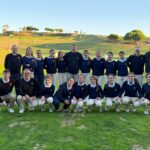
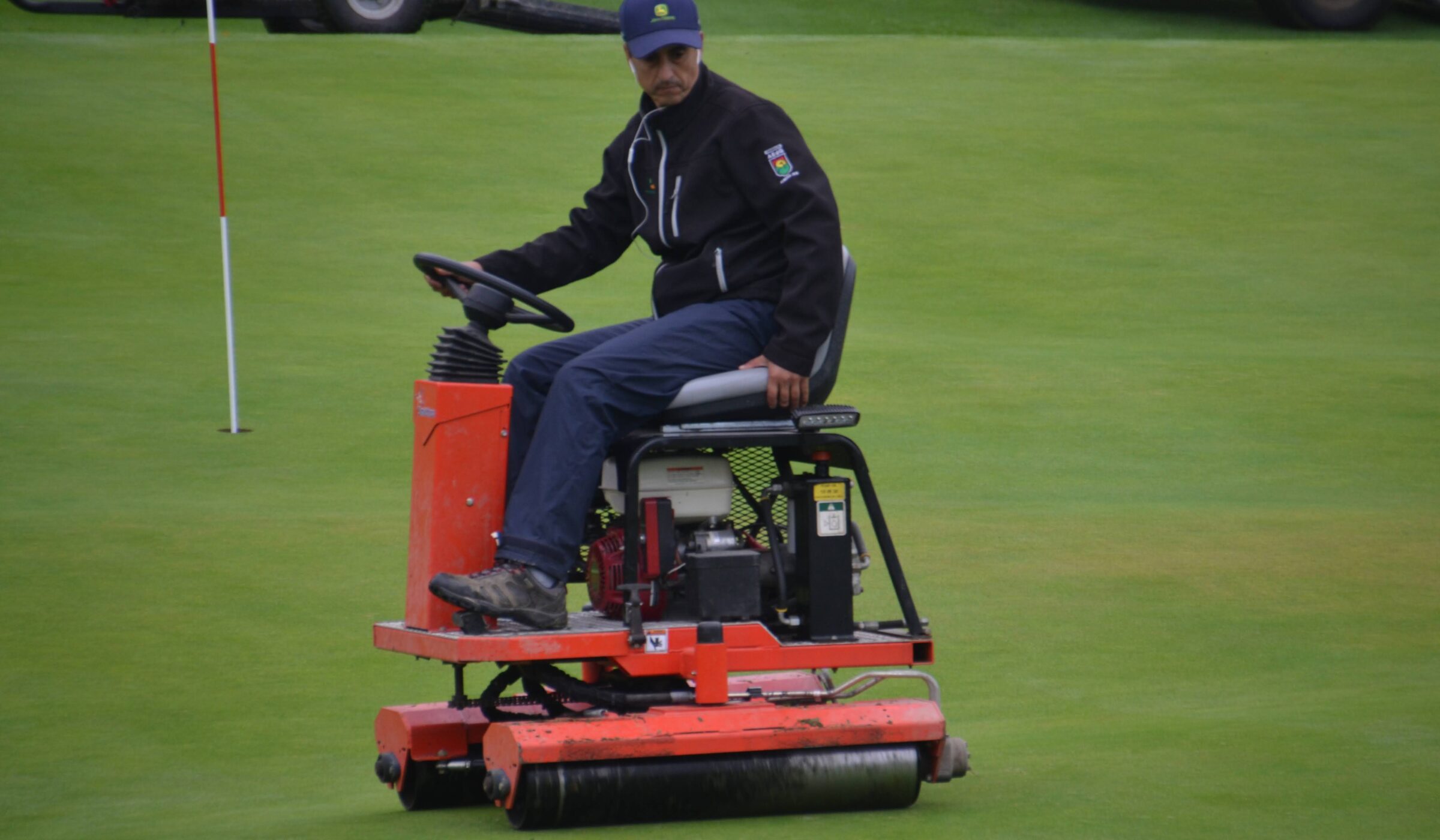
Once the draft of the European regulation on the sustainable use of plant protection products was approved, the main entities in the golf sector - the Royal Spanish Golf Federation (RFEG), the Spanish Association of Golf Courses (AECG), the Spanish Association of GreenKeepers (AEDG), the Spanish Association of Golf Managers (AEGG) and the Professional Golfers' Association (PGA.E) - expressed their rejection of it, as well as the prohibition of the use of chemical plant protection products, putting forward the following arguments.
Sports lawns, and especially golf courses, are facilities closed to the general public, with access control and rules of use and behavior, which distances the reality of their management from that of other green areas for sports, leisure and enjoyment.
These spaces constitute their own ecosystems, providing a stable and tranquil habitat for plants and animals. Other organisms, such as insects, fungi, and parasites, also thrive in these environments and can become pests for people (pine processionary caterpillars, for example) or for the lawns (fungal diseases, insect infestations, nematodes, or weeds). To maintain the necessary balance of these spaces, as required by any ecosystem, golf courses and their technicians employ a wide range of tools that comprise what is known as Integrated Pest Management.
This Integrated Pest Management includes all the cultural tasks carried out on Golf Courses (mowing, fertilization, irrigation…) and aims to manage strong lawns and habitats so that potential pests do not exceed the established tolerance thresholds.
However, sometimes, as with other human pathogens, imbalances or threats occur that normal tasks and adjustments cannot mitigate, requiring the use of biological control tools, biostimulants and, as a last resort, phytosanitary control.
The use of these last-resort substances is regulated at the European level through the Directive 2009/128/EC already at the national level through its transposition by the Royal Decree 1311/2012 on the Sustainable Use of Plant Protection Products. This legislation is very restrictive in our country (along with the Netherlands, among the most restrictive in Europe) and requires meticulous control of the products applied, where they are applied and why, with the entire operation also having to be supervised by a Specialist Consultant in Plant Protection Products (ROPO Consultant).
Within the framework of the 2030 Agenda, and the objective of reducing the use of plant protection products, the European Union has developed a Proposed Regulation (2.021/2.115) applicable to all areas (agriculture, nurseries, forests, etc.) in which sports fields are defined as "Sensitive Zones", and in which the use of Chemical Plant Protection Products, as well as those of biological origin, even those of low risk, is expressly prohibited.
This prohibition would make it impossible for golf courses to exist in southern Europe given the climatic differences with the rest of the countries, the greater threat of pests, the lack of winter dormancy, etc., affecting at the same time other sports such as professional football, horse racing, croquet, etc.
The fields would become overrun with uncontrollable annual weeds that would naturally die off with the onset of winter and summer, leading to a lack of ground cover and the gradual loss of the turf. Nematodes, insects, and especially fungal diseases would become rampant and uncontrollable, making it impossible to commercialize the facilities or hold professional competitions there.
The playability of golf courses
From the point of view of the practice of the sport of golf, the application of this regulation clearly shows the effects that this would have on the facilities, since the impossibility of a restricted use of phytosanitary products would generate many problems in the playability of the courses: areas would be created that would lose density and remain in the ground, the ball would be filled with mud when it bounced and a homogeneous roll would not be achieved on the green.
The increasing technical sophistication of the sport and the high standards demanded by both national and international players have led to a higher level of maintenance for Spanish golf courses, regardless of their commercial or social business model. This sets Spain apart from other destinations due to its high added value and the excellence of its courses. The implementation of the proposed regulations would represent an irreparable loss to the destination's image.
THE GOLF INDUSTRY IN SPAIN AS A DRIVER OF TOURISM
Taking this into account, the golf sector would be severely affected, and an industry that is presented as a tourist engine for Spain and as the world's leading destination, according to the Study, would be put at risk. “GOLF AS A CATALYST FOR ECONOMIC ACTIVITY” in Spain”, prepared by the Instituto de Empresa University (IE) in collaboration with the Spanish Association of Golf Courses (AECG) and the Royal Spanish Golf Federation (RFEG).
Not surprisingly, according to the study, the sector attracts 1,195,000 foreign tourists annually. 98.61% of these come from Europe. Comparing this figure with the 4.2 million registered golfers in Europe demonstrates both Spain's leading position in golf tourism and its growth potential.
These tourists spend approximately €4.64 billion annually in Spain, excluding spending on golf courses. This direct expenditure has a multiplier effect on indirect and induced income, raising the total impact of tourism spending on the Spanish economy to €11.183 billion. The peak of golf activity does not coincide with the peak of tourist arrivals in Spain, helping to avoid the concentration of tourists in July and August, and thus contributing to the deseasonalization of tourism, making it more sustainable.
Foreign golf tourists visiting Spain differ from the average foreign tourist in that they have a longer average stay. Golf tourists stay an average of 11.9 days compared to 7.4 days for the average tourist in Spain.
The income level of golf tourists is significantly higher than that of the average tourist. While only 8.821% of the average tourist in Spain is classified as high-income, this percentage rises to 26.671% for golf tourists. Overall, high- and upper-middle-income tourists represent 631% of golf tourism, while this percentage drops to 361% for average tourists in Spain.
Overall, the golf sector has a direct impact on the economy of around 5,418 million euros annually (777 million from golf course turnover and 4,640 million from golf tourist spending), which rises to 12,769 million (1,585 million from courses and 11,183 million from golf tourist spending) if we take into account the indirect and induced effects.
Golf course management companies retain a proportionally very small share of the total value they generate. For example, on a tee time of 18 holes during peak season, which has an average price of €90, golf course management companies earn a profit of €5.80. In fact, we estimate that 57.31% of golf course management companies are not profitable.
In terms of employment, directly, indirectly, and through induced effects, the golf sector generates 121,393 jobs annually. The employment directly generated by golf can be considered higher quality than the average employment in Spain. 95.51% of employees working for companies that manage golf courses have permanent contracts, and 94.11% are full-time positions. In comparison, in Spain as a whole, according to the National Statistics Institute (INE), only 73.21% of employment is permanent and 85% is full-time.
Although most tourists stay in hotels, golf tourists are more loyal because they are more likely to stay in their own homes than the average tourist in Spain. While golf tourists have a 23.71% probability of staying in a second home, for the average Spanish tourist this probability is only 51%.
It is estimated that in 2018, foreign golf tourists owned around 283,000 properties, with a total property value of approximately €42 billion. This significant real estate investment resulted in recurring annual spending and greater tourist loyalty to Spain, with a higher probability of repeat visits each year.