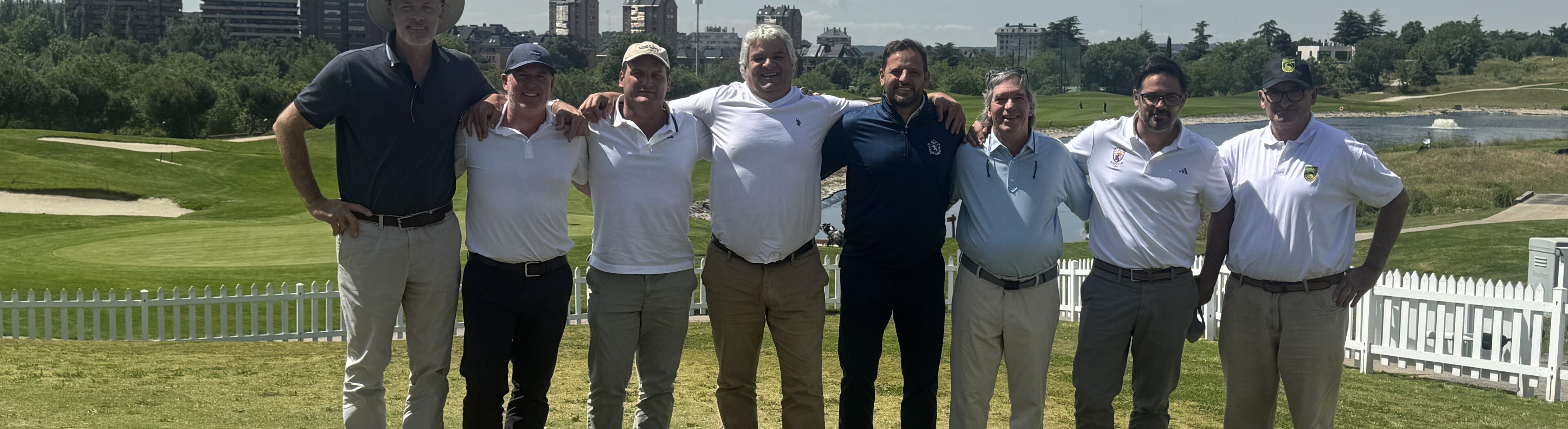
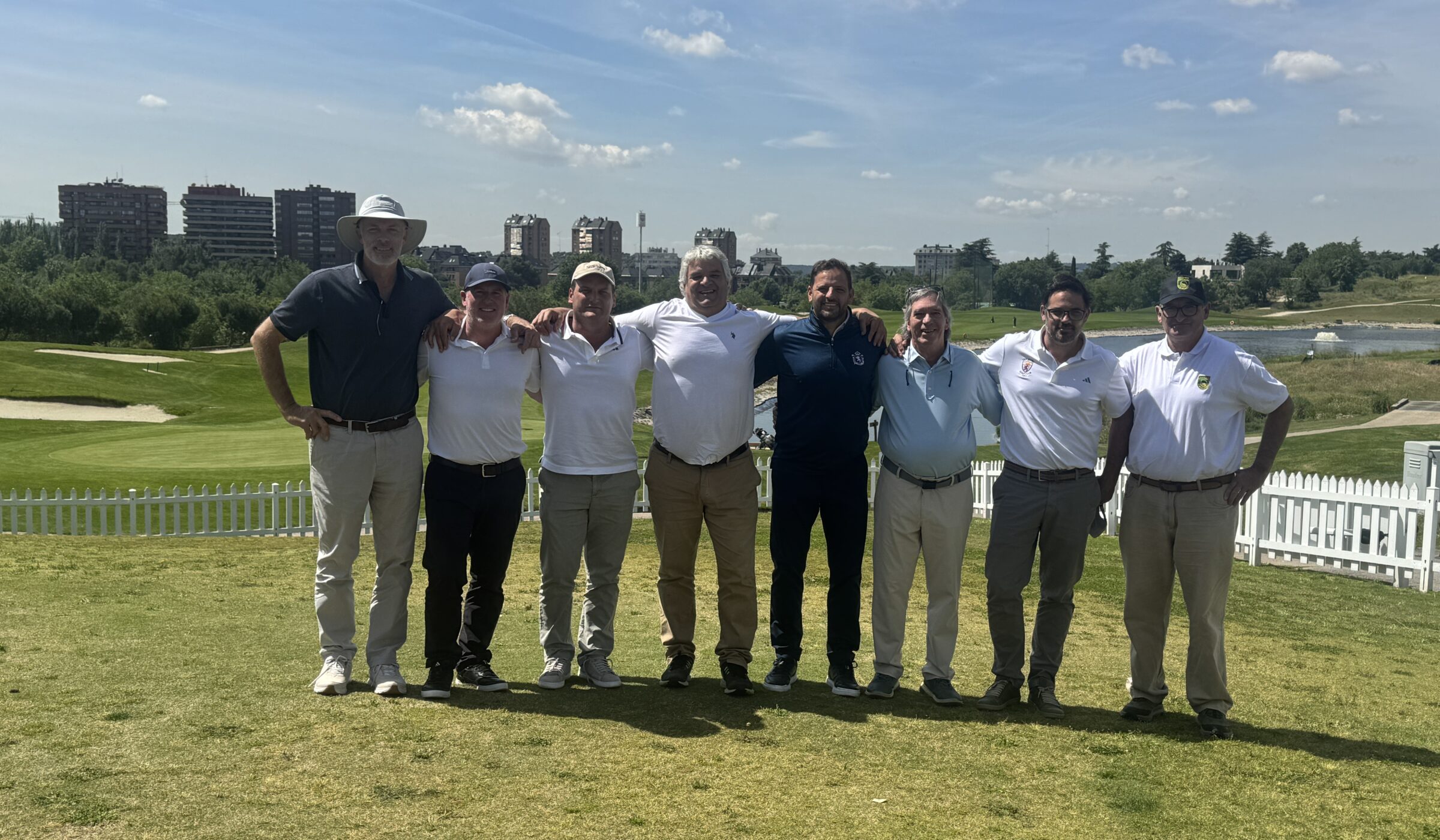
The Green Section of the Royal Spanish Golf Federation and the Spanish Greenkeepers Association welcomed a delegation of Argentine golf course maintenance professionals to the National Golf Centre for a technical visit focused on exchanging knowledge about sustainability, innovation and adaptation to the sector's new environmental challenges.
The expedition consisted of seven Argentine greenkeepers and was led by Ricardo de Udaeta, a professional closely linked to the Argentine Greenkeepers Association and recognized for his extensive experience in the field of agronomy and golf course management.
This visit follows the trip made by representatives of the Green Section in May of last year, where the main advances and strategies being developed in Spain in terms of sustainability and efficient management of golf courses were presented.
During the event, held at the National Golf Centre, some of the major challenges currently facing golf course maintenance in Spain were addressed, such as the strict restrictions on the use of plant protection products, the need to optimize the use of reclaimed water, and the increase in energy, fuel, and input costs.
In this context, the Green Section and the Spanish Association of Greenkeepers showcased the work they have been developing for years in key areas such as research, specialized technical training and the implementation of new technologies applied to the sustainable maintenance of golf courses.
Among the topics discussed were the use of moisture sensors and soil monitoring to optimize water consumption, the robotization of machinery as part of the future of field maintenance, and new agronomic management strategies aimed at maximizing efficiency and reducing environmental impact.
The Argentine delegation will also hold several technical meetings with the Spanish Greenkeepers Association team to analyze in depth the current regulatory situation related to plant protection products in Spain and Europe, as well as the different lines of work being developed with the competent authorities to address regulatory restrictions and ensure sustainable and technically viable maintenance of golf courses in the future.
The visit also provided an opportunity to learn firsthand about the experience of Argentine professionals, whose fields are distinguished by highly sustainable designs, efficient climate adaptations, and the use of low-consumption, high-resilience turfgrass species. This technical exchange proved especially enriching for both parties and reinforces the importance of international cooperation within the sector.
After their visit to Madrid and the National Golf Center, the Argentine delegation will continue this week visiting various golf courses and maintenance centers in the Community of Madrid, while next week they will carry out further technical visits to various clubs in Catalonia, with the aim of continuing to delve deeper into management models, sustainability, applied technology and high-level maintenance.
The Green Section of the RFEG highly values these types of meetings, which allow for sharing experiences, generating synergies, and continuing to strengthen the relationship between professionals committed to the sustainable future of golf.
The day concluded with a commitment to continue promoting future collaborations between Spain and Argentina, fostering the exchange of technical knowledge and the development of innovative solutions to address the present and future challenges of the golf industry.