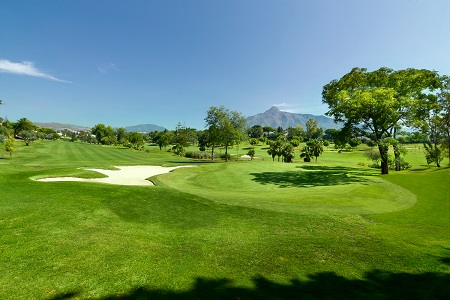
The warm temperatures that Málaga enjoys year-round, combined with the unique layout of its golf courses, create phenomena that occur each season. During these winter months, the province's wide and varied courses become a haven for different bird species seeking refuge from the drop in temperatures experienced across most of Europe.
This situation allows for a carousel of birds, not usually found at these latitudes, to be seen in every field across the province. The best example is the white wagtail (Motacilla alba), which arrives in large flocks in Málaga during this time of year in search of food and a pleasant climate.
Thus, as biologist Miguel Ángel Farfán, a professor at the University of Málaga, explains, this process occurs naturally. “They come to the province seeking well-being and take advantage of what Málaga's golf courses offer, where they can find water and places to take shelter,” the expert admits.
Another point to emphasize, according to Farfán, is that throughout the year, the province boasts a rich and diverse array of animal species. Thus, aided by the combination of sea and inland areas, Málaga becomes the perfect habitat for a multitude of animals.
“Depending on the area of the province, we may find one species or another. The different structures, according to the orientation of the fields, can mean that wild boars appear in the north and east of Malaga, while on the western coast we can see otters living along the different routes,” explains the biologist.
It's not just birds that rely on golf courses for sustenance; fish, such as carp, are also common in the water features of these courses. Furthermore, aquatic species like mallards and egrets, which typically inhabit the banks, can be found in the ponds.
Meanwhile, outside the playing areas, during this time of year you can find typical scrubland species, such as coal tits, which are small and seek out wooded areas.
“On the Costa del Sol we have everything to find a great diversity of animal species that take advantage of the large facilities that the golf courses have and their good natural condition,” explains Miguel Ángel Farfán.
This biologist also points out that golf courses in Malaga "have no environmental impact." So much so, he cites cases like that of the Florida red-eared slider, which, accustomed to a much more extreme climate, has spread throughout the province's numerous courses due to releases. Playing a few holes on the Costa del Sol can be a truly immersive experience in nature, especially during the cooler months when temperatures can reach 20 degrees Celsius.
SOURCE: Malaga Provincial Council