The opening of the first golf course in Spain—the Real Club de Golf de Las Palmas—and the expansion of this wonderful sport throughout the Iberian Peninsula during the first two decades of the 20th century were the focus of the previous issue. While developing in the Canary Islands and more advanced in Madrid, the Basque Country, and Catalonia, the spread of this green spirit to other parts of Spain was a slow but unstoppable trickle.
An increasingly wide range of offerings
It was precisely in Catalonia, during the 1920s, that new golf course projects continued to take shape, essential then as they are today for the development and growth of our sport. Such was the case, in 1919, of the course established in Sant Cugat del Vallés, 20 kilometers from Barcelona, a 9-hole course that at that time complemented the exclusive offering of the 'Mare Club de Golf de Pedralbes'.
Initially promoted and managed by a group of foreigners residing in Barcelona at the time, it eventually became the property of the Catalans themselves, who used its facilities in ever-increasing numbers. Indeed, the offerings expanded shortly thereafter, specifically in 1922, with the inauguration of the Terramar Golf Club, also with a 9-hole course that would take more than 50 years to expand to its current 18 holes.
The tentacles of golf soon spread further into the area, almost reaching the French border, specifically in the Cerdanya Valley, just three kilometers from the Puigcerdá ski resort, with the Real Club de Golf de Cerdanya, a ski-golf leisure offering that was completely cutting-edge for the time. Although initially located on extremely small land—clearly insufficient to offer its visitors even a 9-hole course—its members later acquired more land, inaugurating in 1948 new facilities more in line with the demands of the time, a beautifully crafted 9-hole course that over the years was expanded to the current 27.
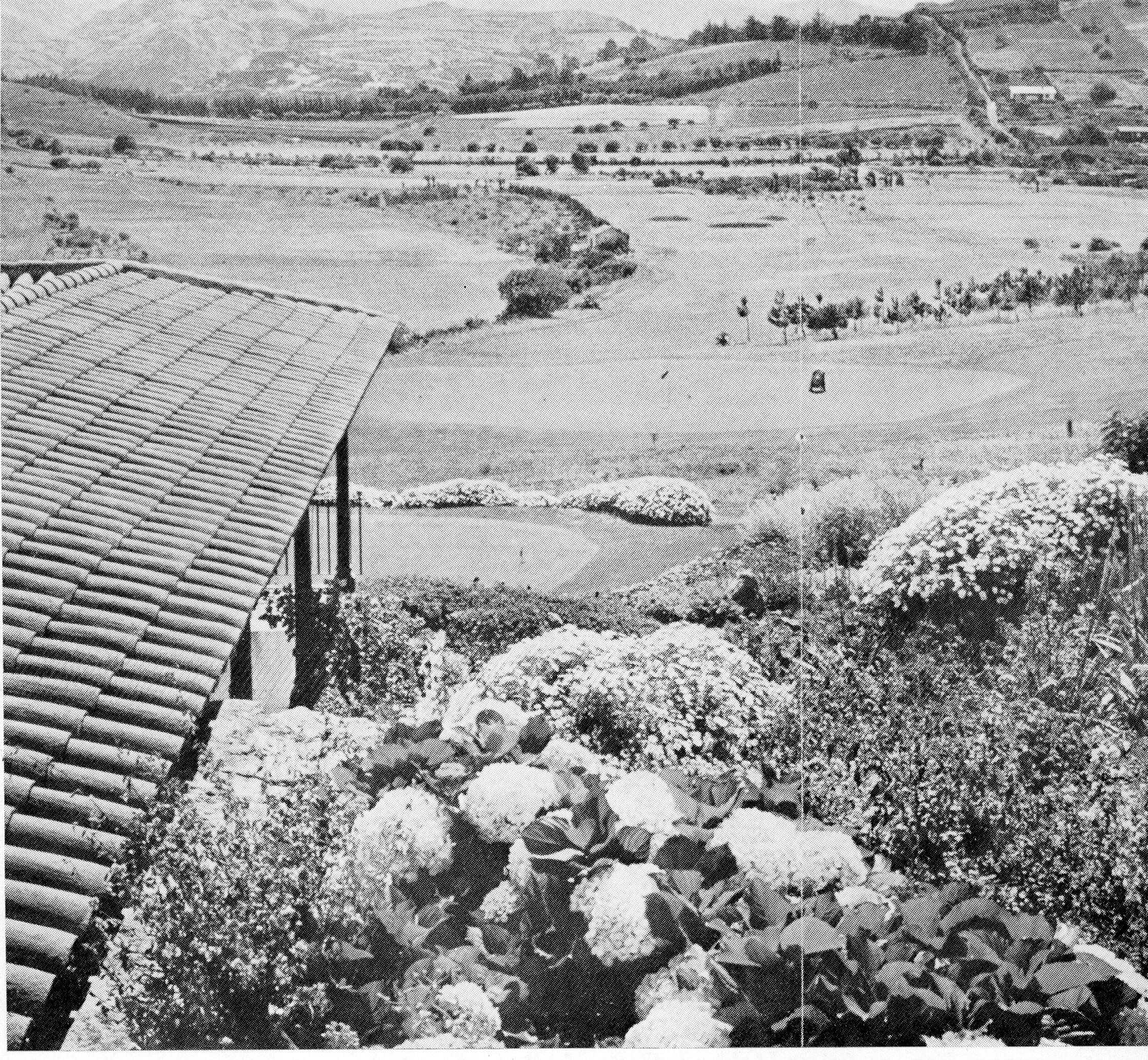
The Spanish authorities, generally unaware of this burgeoning growth of golf and its true potential, nevertheless promoted the construction of a golf course in the heart of the Costa del Sol to attract the then-nascent foreign tourist market. Thus, in 1925, the General Directorate of Tourism built a 9-hole course called the Málaga Country Club, halfway between Málaga and Torremolinos. Its novel feature was the option of staying on the premises—now the Parador Nacional de Turismo—for those who wished to do so.
At the opposite end of Spain, specifically in Santander, one of the country's most beautiful golf courses was born almost simultaneously, if only for its spectacular location. Situated on a peninsula in the stunning Bay of Santander, at its southern tip, directly across from the city, the Real Golf de Pedreña quickly gained a reputation that extended far beyond the borders of Cantabria. Although it is 24 kilometers from the city of Santander by road, a convenient motorboat, owned by the Club, made the crossing in just a few minutes for all those who chose the port of Santander as the starting point of their golfing pilgrimage.
The well-known rivalry between Gran Canaria and Tenerife also spurred the construction of the second golf course in the Canary Islands, this time on the island dominated by the majestic Mount Teide. Its promoters named it Club de Golf Tenerife El Peñón, given its location on Peñón Guamasa, just 2 kilometers from the airport, in the beautiful La Orotava valley. It had only 12 holes then – 18 now – finally satisfying the golfing cravings of the people of Tenerife.
Traumatic consequences
The terrible civil war, as in so many other aspects of Spanish life, brought the expansion of golf to a standstill for several years. In some cases, its direct impact had traumatic consequences, as was the case with the Club de Campo de Madrid, a magnificent 18-hole course located on the grounds of El Pardo, which, inaugurated in 1930, was completely destroyed during the Civil War.
Upon its conclusion in 1942, its managers merged their shares with those of the Royal Spanish Equestrian Society, resulting in the current Royal Spanish Equestrian Society Country Club, building a new course – the current Villa de Madrid Country Club – on part of the old grounds within the Casa de Campo park. This course has been expanded several times since then and is now located within the city of Madrid, regularly hosting top-level international competitions.
The championships held in our country during those years were far more in their infancy. Apart from the Puerta de Hierro National Cup, whose early days we covered in detail in the previous issue, the Spanish International Amateur Championship was the only truly consistent tournament held during the first three decades of the 20th century.
As could not be otherwise, this competition had a development mimicking that of the aforementioned Puerta de Hierro National Cup, with triumphs, in the early years, of the Madrid natives Conde de Cimera and Conde Cuevas, sporadic incursions in the list of winners by foreign players residing in Spain and the subsequent dominance of the Basque players, with Luis Olabarri and the Arana saga (Luis, Javier, Luis Ignacio) at the forefront.
In the women's category, the situation was faithfully replicated, with the added circumstance that, due to the society of the time, the number of players was quite small. Both competitions were held at the same Club, offering Elena de Potestad –champion three times consecutively between 1911 and 1913–, the Marchioness of Almohacid, the Marchioness of Villaviciosa, the Countess of Torre Hermosa… the opportunity to showcase their golfing skills in clear competition with those foreigners –Buring, Viegue, Cowirick, etc.– who lived in Spain and who also inscribed their names on the winners' list of this competition before the Civil War.