What memories do golfers of the caliber of the Miguel brothers – Ángel and Sebastián –, the endearing Luis Ignacio Arana, Iván Maura, Ramón Sota or Ramón Tayá, to give some significant examples prior to the more recent José María Cañizares, Manuel Piñero, Antonio Garrido or the immeasurable Severiano Ballesteros, a fundamental pillar in the history of Spanish golf, prior to the fabulous exploits of José María Olazábal and Sergio García, evoke for you?
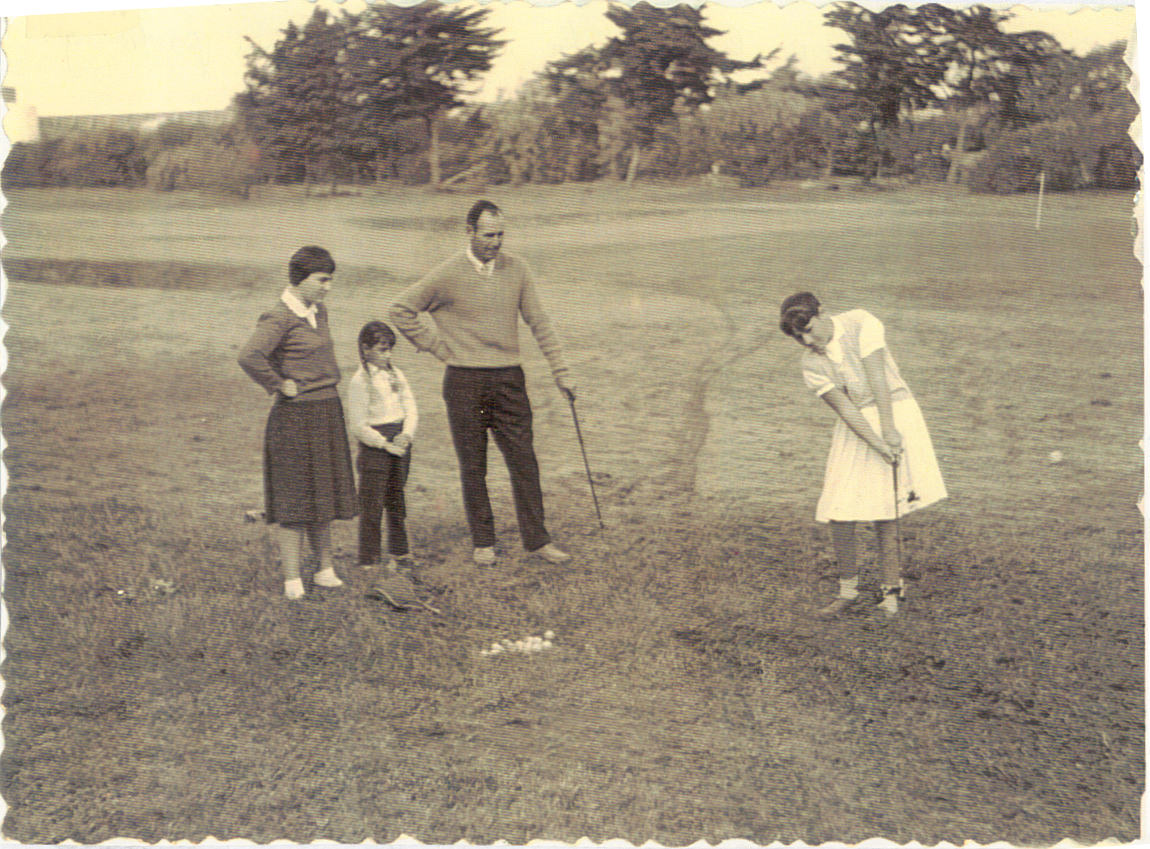
What was the contribution of the pioneering players in Spain, those (Merche Artiach, Elvira Larrazábal, Carmen Maestre, etc.) who have passed the torch to the current generations?
Players with a history
These pages mark the beginning of a series of stories from the past, not strictly chronological, chosen from here and there, from this year and that year, always united by their intrinsic historical interest. Sometimes they will focus on a particular competition; at other times, on a central figure who has been involved in countless anecdotes. All the players mentioned above, and many more, as well as the most significant Championships in the history of Spanish golf and their main anecdotes, will have a place in these pages. We apologize in advance if the sources consulted—sometimes simply the memory of someone—do not definitively establish the exact date on which a specific event actually occurred, although everyone can rest assured that the information will be very, very close to the truth.
The sport of golf arrived in Spain, of course, much later than when some shepherds in Scotland began hitting a ball with a stick on one of the country's endless meadows. These tentative beginnings, dating back to the 15th century, are documented by some paintings from that period and by the Scottish Parliament's prohibition of golf in 1457—a bad start indeed—due to the excessive popularity of an activity that interfered with archery, essential for national defense.
From the back-and-forth discussions about how golf grew in the British Isles, with the direct intervention of the Archbishop of St. Andrews, the magistrates of Edinburgh, and some of the Kings of England—such as James VI, Charles I, or Mary Stuart herself, possibly the first golf player in history—who issued laws to allow its practice, came the first international match in history, the one that pitted England against Scotland and ended with the latter's victory.
However, the true regulation of this sport is owed to St. Andrews, a club located on the North Sea coast near Glasgow, founded by 22 noblemen in 1754 after drafting the first set of rules in history. Considered the Mecca of golf, it has since dictated and established the rules on all those matters—very few—that were not previously foreseen, offering supreme recognition to all those players fortunate enough to win at St. Andrews, a place that evokes neither a city nor a university nor a dazzling site crowned by the Lochnagar ridge, but rather an idyllically beautiful expanse currently dotted with twelve courses near the mythical and original St. Andrews.
The expansionist ambitions of the British Empire took golf beyond its natural borders during the 19th century. India, France – due to its geographical proximity – Canada, and the United States were gradually conquered by this veritable green fever, now practiced by more than 60 million people worldwide. In Spain, thanks to a group of British residents on the island of Gran Canaria, golf officially arrived in 1891, the year the current Real Club de Golf de Las Palmas was founded. Located on an estate called 'Lomo del Polvo,' it was the first golf course built in Spain.