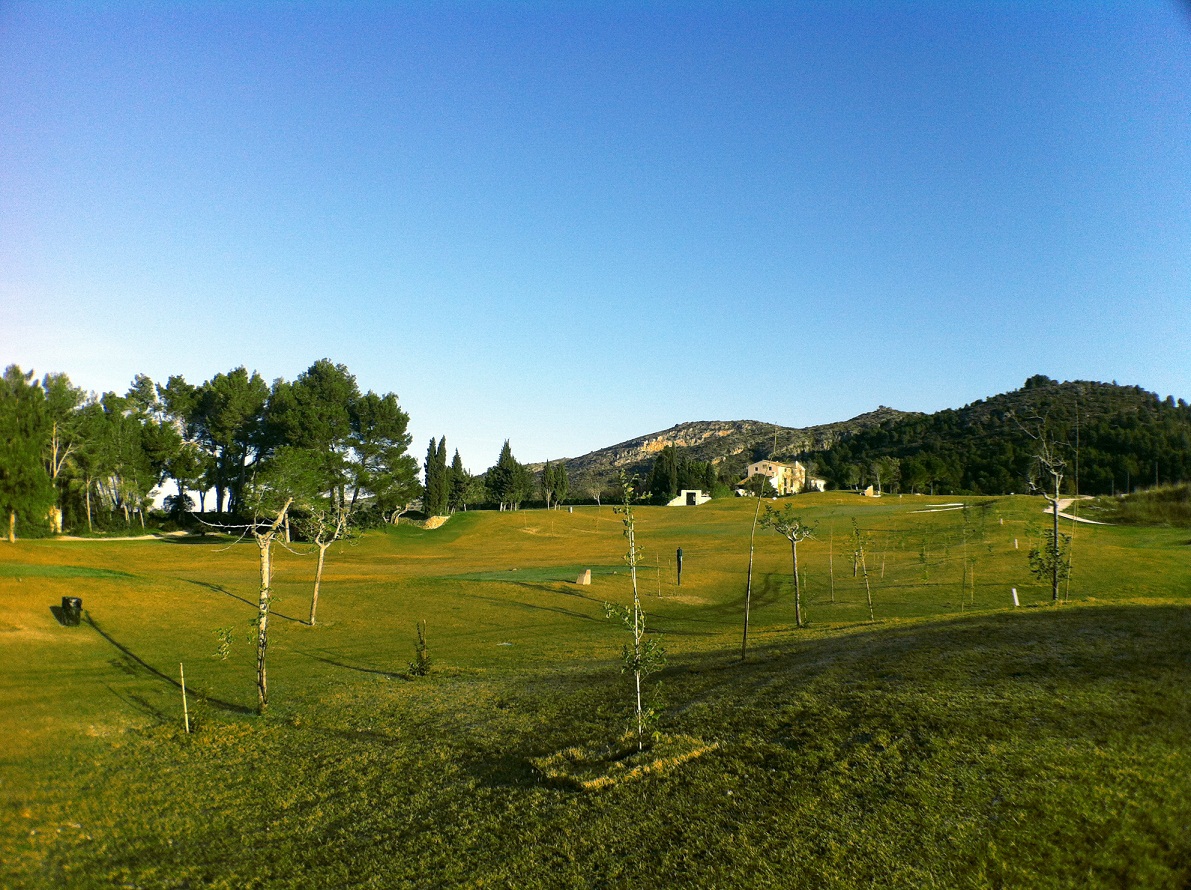
The new course at La Sella Golf, designed like the previous one by Ryder Cup captain José María Olazábal, and inaugurated three years ago, has completed the first part of its tree planting program, an initiative that increases the environmental commitment of this Alicante course.
In this first phase, more than 25 carefully selected species have been introduced to avoid altering the balance of the Montgó Natural Park, next to which the golf course is located. More than 1,000 trees will also provide the course with added strategic value for the player, in addition to the value that José María Olazábal, as designer, gave it from the moment of its construction.
This new initiative reaffirms La Sella Golf's position as a leader in environmental sustainability within the Spanish golf sector. A few years ago, the largest colony of greater mouse-eared bats in Spain, a critically endangered species, was discovered on this golf course, confirming that La Sella Golf is an essential natural habitat for its conservation.
This new environmental project includes the planting of more than 25 species, with almost 1,100 specimens of native trees and shrubs from the Montgó Natural Park.
The director of this project is the biologist and botanist Jaume X. Soler, manager of the company Botánica Mediterránea, dedicated to environmental studies and agro-environmental management, an authority on the native species of the Valencian Community, with more than 10 books published on this subject.
Soler collaborated on the selection of species with specialists from 'Proyecto Forestal Ibérico', the nursery that supplied all the plants and is a pioneer in Spain in the cultivation of native species from the Iberian Peninsula. Furthermore, this nursery, located in Albacete, guarantees the genetic purity of all its species.
In this plantation on the new La Sella Golf course, various Mediterranean ecosystems have been recreated, such as wild olive groves (native olive forests), tamarind forests, and, above all, a mixed forest of pines and holm oaks, which was the predominant forest throughout the Marina Alta region just over 150 years ago, when it was decimated by the pressure of population growth and agriculture. Even today, remnants of these forests remain in the vicinity of the golf course and even within the original 18-hole layout of La Sella Golf.
The aim of this planting is, among other things, to showcase the plant diversity of the region and to demonstrate that with a good selection of different native species the result is visually as spectacular as planting with exotic species.
Furthermore, it is much more profitable, since these are plants that survive without the need for irrigation and that contribute to the environmental balance of the area.
Within this plan, which has just begun, the introduction of 125 different species is planned. In this first phase, among the nearly 1,100 specimens introduced, there are varieties as interesting as barberry, manna ash, mastic tree, strawberry tree, and viburnum, species that made up the ancient laurel forest, which existed in the area since the Tertiary period, 60 million years ago.
Of particular interest is the presence of dwarf palms, which are the only native European palm, and the Ephedra Fragilis or 'trumpet palm', a relic of the flora from the Mesozoic period that has survived to this day.
Also noteworthy is the presence of two species such as the black juniper (possessing wood of extraordinary quality, which for that reason almost disappears from our forests) or the Thymbra Capitata, known in the area as pebrella, and which is also protected.
With this project, La Sella Golf takes another step in its commitment to economic and environmental sustainability, becoming a benchmark within the Spanish and international tourism sector.