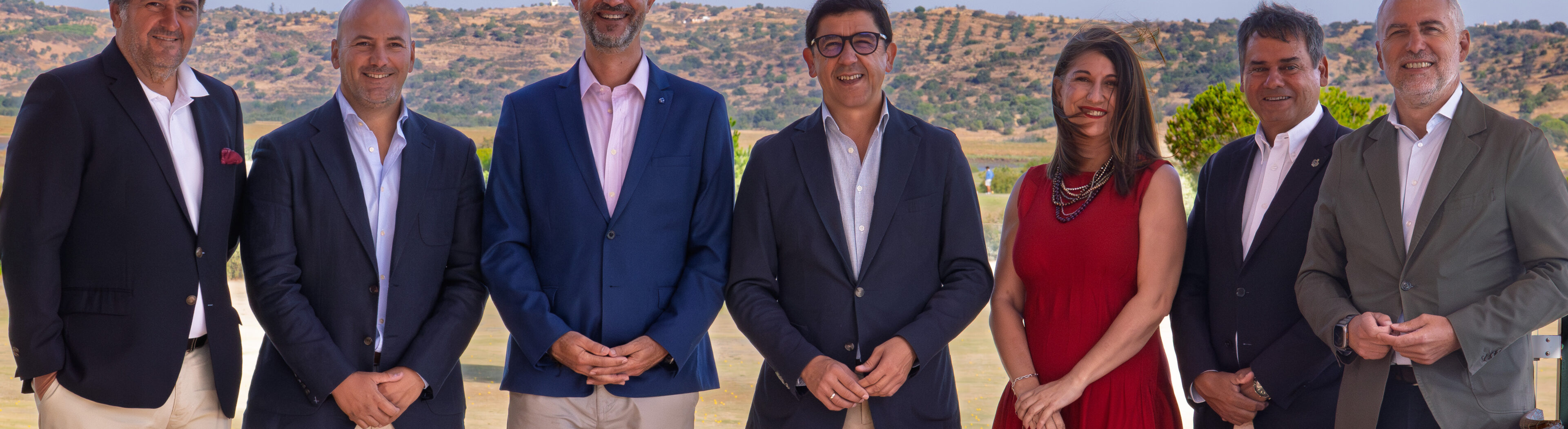
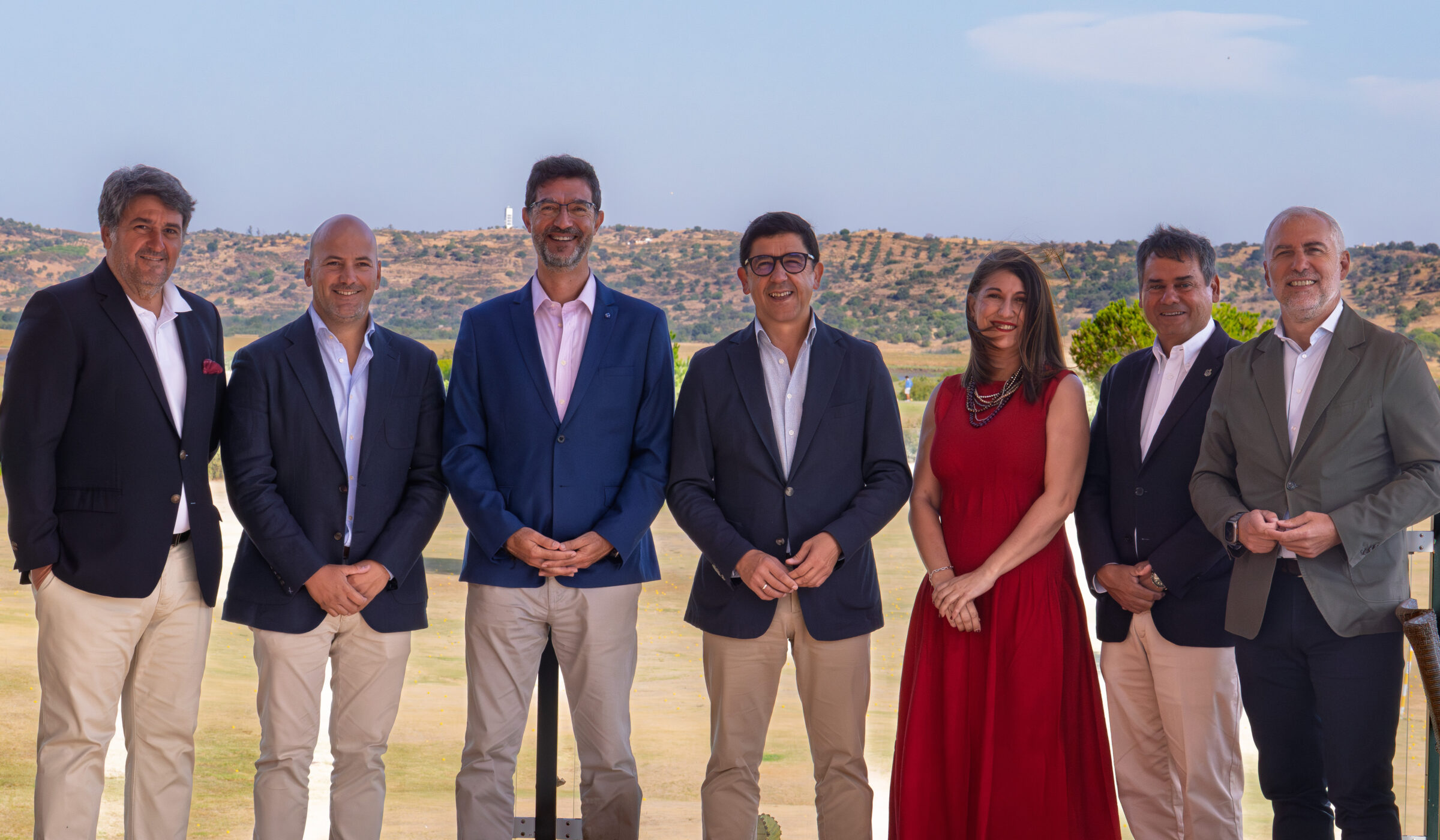
Isla Canela Links hosted the presentation of the Executive Report “Water Management in golf courses. Province of Huelva”, a technical and informative study promoted by the Provincial Council of Huelva, the Spanish Association of Golf Courses (AECG), the Association of Golf Courses of Huelva, the Royal Spanish Golf Federation and the Royal Andalusian Golf Federation, and carried out by the University of Cádiz.
The report analyzes, with objective data, the water efficiency of golf courses in the province, debunking myths and highlighting their contribution to the local economy, the environment, and sustainable tourism.
During the presentation, Tino Cordero Brazo, president of the Huelva Golf Courses Association, opened the event by emphasizing that "the courses in the province are committed to a responsible model that respects natural resources, and this report demonstrates this with facts and figures.".
Pablo Mansilla García, president of the Royal Andalusian Golf Federation, highlighted the need to continue communicating the reality of the sector better: “We have been applying exemplary measures in sustainability for years, but we face a social perception that is often unfair and uninformed.”.
For his part, Santiago Urquijo Ruiz-Giménez, Secretary General of the AECG, recalled that “golf not only generates employment and quality tourism, it can also be part of the solution in water management, through innovation and environmental commitment.”.
The author of the study, Juan Antonio López Ramírez, professor of Environmental Technology at the University of Cádiz, explained that the fields of Huelva mostly use reclaimed or non-potable water, apply intelligent irrigation systems, and maintain naturalized areas that favor biodiversity.
In her address, Teresa Herrera, the Huelva territorial delegate for Tourism, Culture and Sport, highlighted “the strategic value of golf in the sustainable tourism development of the province and the sector's commitment to the responsible management of resources. These studies and testimonials demonstrate that golf in Spain not only generates employment and boosts local economies, but also actively contributes to environmental conservation and social well-being, making golf a sustainable engine that balances economic progress, environmental respect, and social cohesion.”.
The event was closed by Alberto Fernández Rodríguez, vice president of the Huelva Provincial Council and mayor of Ayamonte, who reaffirmed institutional support for the sector: “Golf is a key element in Huelva's tourism strategy and its evolution towards a green model must be recognized and supported.”.
The event concluded with an informal breakfast where attendees, including industry professionals, media representatives and institutional representatives, were able to exchange views on the challenges and opportunities of sustainable golf in Andalusia.