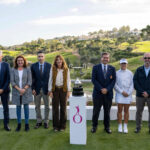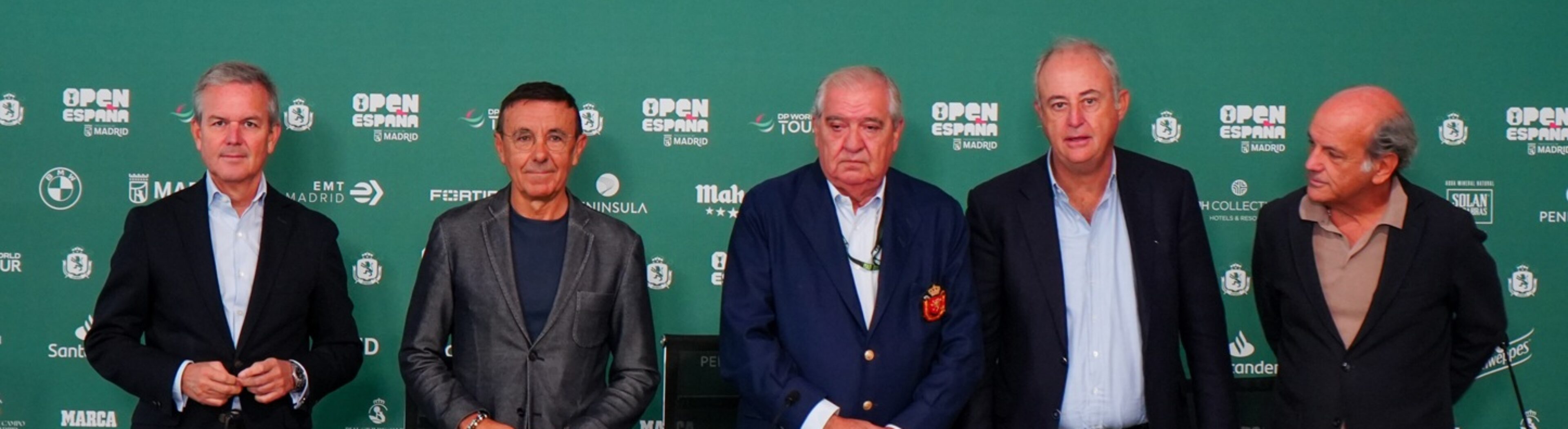
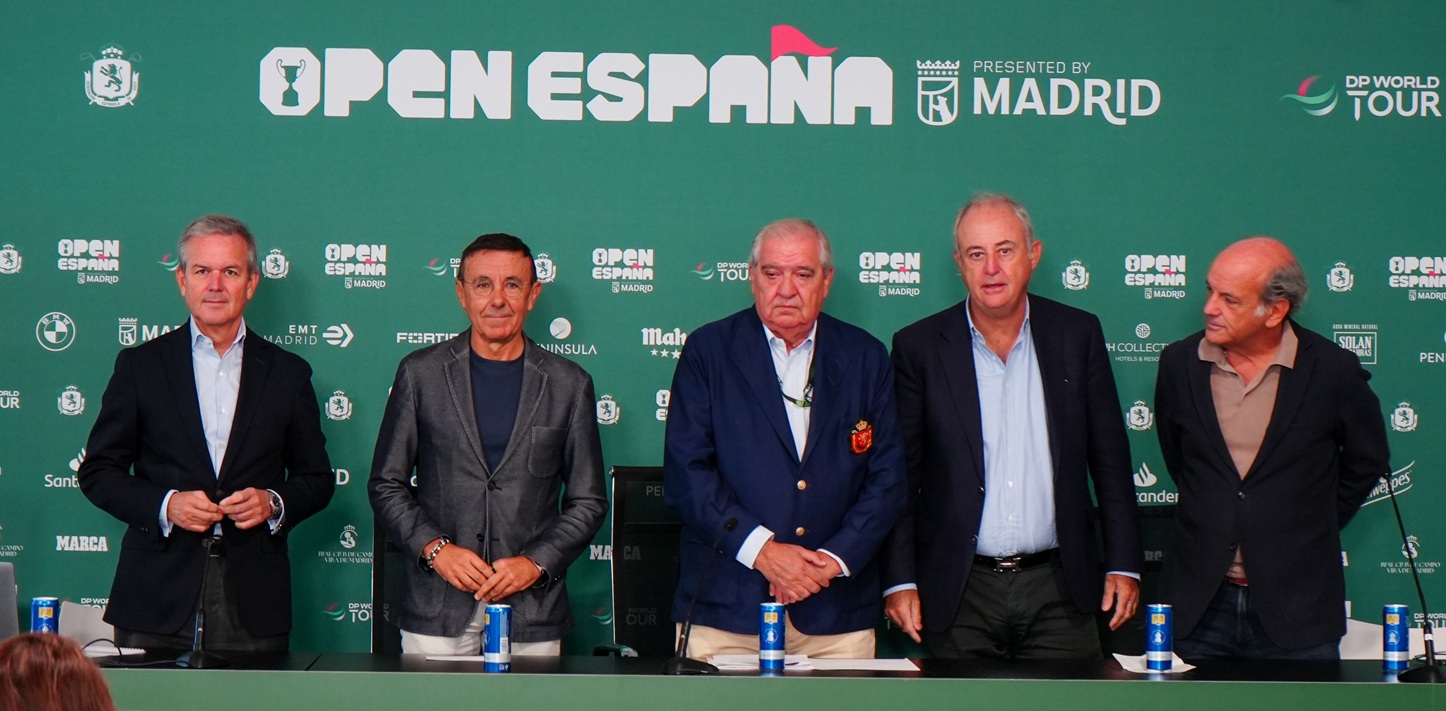
The Royal Spanish Golf Federation (RFEG) and the Spanish Association of Golf Courses (AECG) presented the report during the Spanish Open Golf Tournament. «"Proposal for the application of the reduced VAT rate to golf and sporting activity in general"», prepared by EY, which proposes to recover a reduced rate of 10 % for services related to sports practice.
The initiative goes beyond golf and aims to contribute economic, legal, and social arguments to the debate on sports taxation in Spain. In September 2012, sports services were taxed at the reduced rate of 8% to the standard rate of 21%, despite European regulations allowing member states to apply reduced rates to the use of sports facilities. Countries such as Cyprus (5%), Sweden and Belgium (6%), Malta (7%), Ireland (9%), and the Netherlands (10%) already do so, and the Canary Islands have applied a reduced IGIC (Canary Islands General Indirect Tax) of 3% to sports activities since 2025.
The president of the RFEG, Juan Guerrero-Burgos, He emphasized the social and health dimension of sport: "If sport has been recognized as an essential activity, we must move towards a tax system consistent with that consideration.".
The president of the AECG, Luis Nigorra, He explained why both organizations promoted the study: "We didn't ask for an exception for golf. We used golf data to demonstrate what taxation favorable to sports can do for the entire economy.".
Golf as a case study
According to the figures collected in the report, the economic impact of golf in Spain reaches 15.937 billion euros annually and the country receives close to 1.4 million international golf tourists. 8.9 out of every 10 euros The revenue generated is reinvested in sectors other than the fields themselves, especially in tourism and services.
The sector generates 132,994 direct, indirect and induced jobs: 118,908 associated with tourist spending and 14,086 to the activity of the fields, where 93 % of the contracts are permanent.
An estimated neutral or positive revenue impact
According to EY's estimates, the reduction would initially mean 35 million euros less in direct revenue, These losses would be offset by increased activity on the courses (€3.2 million) and, above all, by VAT on tourist spending related to golf (€34.5 million). The model estimates a overall balance of approximately +2.5 million euros, without including other positive effects on Personal Income Tax, Social Security contributions or Corporate Income Tax.
Alberto García Valera, The partner in charge of Tax Policy at EY Abogados, has stressed that the measure "fully fits within the European VAT Directive and that the analysis shows that, with the VAT rate being one of the highest on this activity in the EU, it hinders the growth of the sector and reduces our competitiveness compared to Europe, reducing induced economic activity.".
The VAT increase in 2012 generated an immediate revenue benefit, but at the cost of slowing the sector's growth: competitiveness was lost compared to Europe and induced economic activity was reduced.".
A proposal for all Spanish sport
The president of the Spanish Sports Association (ADESP), José Hidalgo, The initiative has been framed within a broader review of sports taxation: “Spanish sport needs taxation that reflects its importance in our society and economy. We are not just talking about a leisure activity: sport is health, education, inclusion, employment, tourism, and a tool for social cohesion. That is why we believe it is necessary to review the current VAT treatment and reinstate a reduced rate for sports activities.”.
Sport in Spain has a total impact of 44,839 million euros of added value (3.28% of GDP) y more than 635,000 full-time equivalent jobs, according to the study "The value and economic impact of sport in Spain", by Ivie.
The ADESP proposal maintains the current exemptions for certain sports services and entities; it reduces to 10 % The VAT on sports activities and services and professional sporting events is currently at 21%; and the proposal includes an exemption or a rate of 4% for amateur events. ADESP has submitted these proposals to all political parties represented in the Congress of Deputies to encourage their analysis and debate.
With this initiative, RFEG, AECG and ADESP seek to open a data-based debate on sports taxation in Spain.
About the entities
Royal Spanish Golf Federation (RFEG). The Royal Spanish Golf Federation is a private, non-profit association with its own legal personality and assets, independent of those of its members. It has full legal capacity to act in pursuit of its objectives and is comprised of regional sports federations, clubs, athletes, coaches, referees, and other interested groups that promote, practice, or contribute to the development of golf within Spain.
Spanish Association of Golf Courses (AECG). A non-profit business organization founded in 2015 to defend and promote the social and economic interests of the golf industry. It comprises more than 220 facilities, representing 57% of the sector, regardless of their legal structure: sports associations, commercial companies, hotel chains, and municipal courses.
Spanish Sports Association (ADESP). The Spanish Sports Association (ADESP) represents all Spanish sports federations and works to promote organized sport as an essential tool for social, economic, educational, and health transformation. ADESP is the main representative of the Spanish sports federation system to public and private institutions, with which it promotes projects aimed at strengthening sport, improving its structures, and fostering its contribution to the development of our society.