Spanish golf ended 2019 with 271,470 registered members, 269,919 of them amateurs and 1,551 professionals, according to the official count dated December 31.
This figure represents an absolute increase of 300 licenses during the past year, which in percentage terms is 0.1% more than at the beginning of the year, breaking a prolonged streak of nine consecutive years of decline experienced in the period between 2010 and 2018, coinciding with much of the prolonged economic crisis and social changes that have conditioned the development of very diverse sectors of Spanish society for many years.
This data also confirms a trend that began in 2013, when the peak of the decrease was reached – specifically 6.0% – subsequently slowed in 2014 (-3.7%), 2015 (-2.7%), 2016 (-1.5%), 2017 (-0.5%) and 2018 (-0.3%) before giving way to the aforementioned growth of 0.1% that draws a curve that, in statistical terms, is understood as an inflection point from that moment.
Looking at a longer period, it's worth noting that in 1990 there were 45,000 players in Spain; the 100,000 mark was surpassed in 1996; 200,000 were registered in the first months of 2002; by mid-2004, 250,000 were counted, and by the end of 2006, the 300,000 mark had been exceeded. The peak number of licenses occurred in 2010, with 338,588 registered players, after which the decline described above began.
Women and the future of golf in Spain
It should be noted that the number of female licenses currently exceeds 76,000, which represents 28.2% of the total number of golf licenses in Spain.
Of these, 42,803 correspond to women over 50 years old, 21,764 to women between 21 and 50 years old and 11,676 to those under 21 years old, with special mention for the 8,331 under 16 years old.
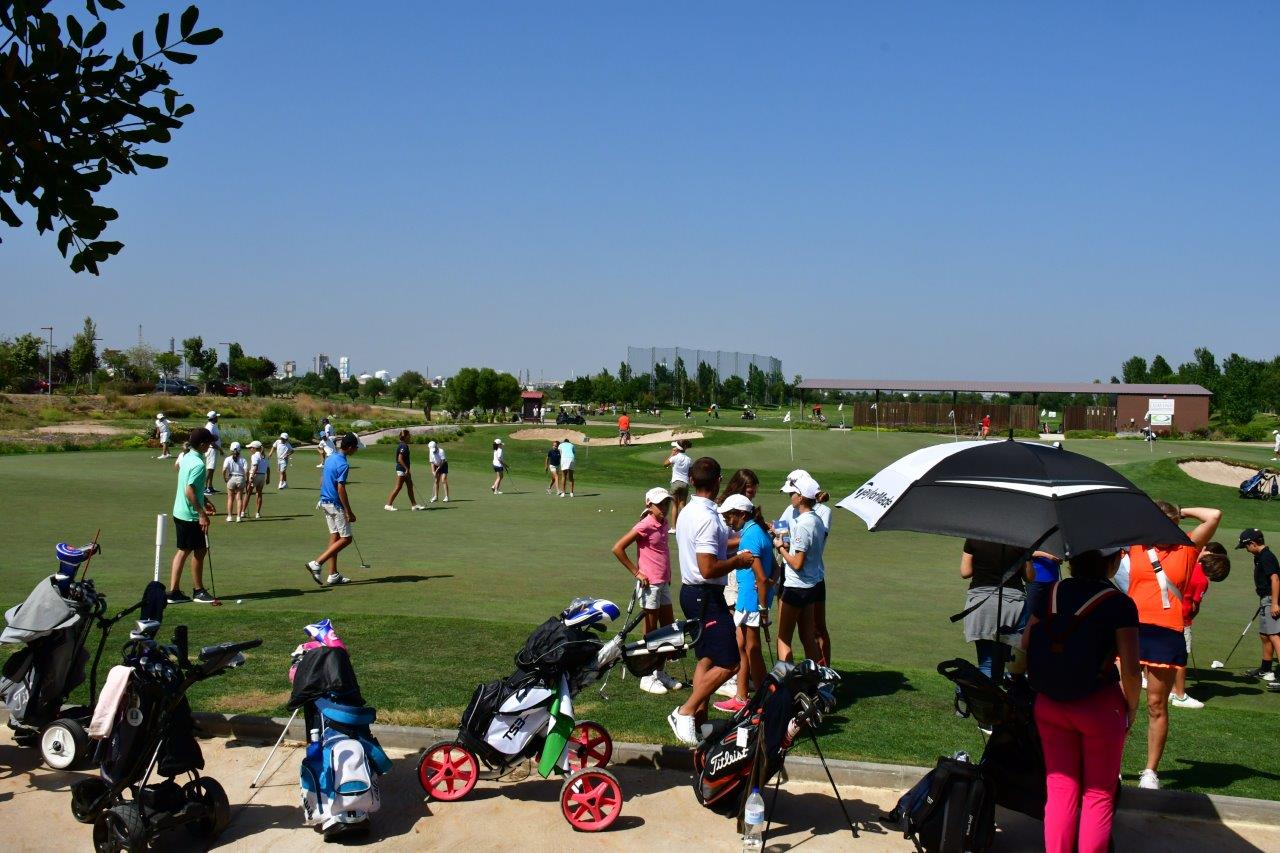
Among the youngest, it should be noted that the Spanish golf pool is based on 23,894 boys and girls under 16 years of age – more than 34,000, specifically 34,374, if the age range is extended to 21 years – which in percentage terms represents 8.8 % or 12.7% of the total number of registered members, respectively.
It should be noted in this case that the base of Spanish golf continues to expand little by little, since at the beginning of 2015 there were 21,530 under 16 years of age –33,682 up to 21 years of age–, which in percentage terms then represented 7.6 % or 11.9 %, respectively, a process of slow growth that coincides with the progressive and gradual implementation of the Golf in Schools Program, the Friends Cup and various promotional actions among the youngest that are jointly developed by the RFEG, Autonomous Federations and Clubs for several years now.
Data by Autonomous Communities
While all Autonomous Communities registered losses in the area of licenses during 2015, in 2019 eight ended up positive and eleven in negative, although in all cases with small variations up or down, data that in any case improve those recorded in 2018, when only six Autonomous Communities saw an increase in their number of members.
In absolute terms, Madrid, with 82,993 members, accounts for 30.51% of the total number of licenses, followed by Andalusia, with 44,308, and Catalonia, with 28,137, which together account for 16.31% and 10.31% of the total number of members, respectively.
The Valencian Community (19,245), the Basque Country (17,187), Castile and León (13,005) and Galicia (10,498) are the other Autonomous Communities that exceed the 10,000 member threshold.
The region that added the most licenses during the year 2019 was Andalusia, with 508 members (1.15% more), followed by Madrid, in its case with 463 (0.56% more).
The Canary Islands, with 7,775 licenses and an increase of 177 (2,32%); Castilla La Mancha, with 5,346 and an increase of 173 (3,34%); Aragon, with 6,302 and an increase of 133 (2,15%); Murcia, with 5,891 and an increase of 93 (1,60%); the Balearic Islands, with 7,332 and an increase of 10 (0,14%); and Galicia, with 10,498 and an increase of 8 (0,07%) have also experienced increases.
Regarding losses, which have been less severe than in previous years, La Rioja, the Valencian Community, Cantabria, Extremadura and the Basque Country have fared the best, with respective decreases of 0.24%, 0.25%, 0.25%, 0.41% and 0.81%, figures which in some cases are close to equilibrium with respect to 2018.
In absolute terms, Catalonia and Castile and León were the Autonomous Communities that suffered the greatest decrease in members throughout 2019, specifically 559 and 220 fewer licenses, respectively.
Statistical data below, in the Related Links section.