
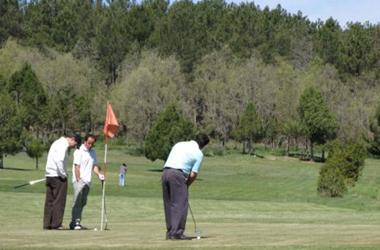
The Royal Spanish Golf Federation, through its Technical Rules Committee, has promoted a plan to intensify game controls in the highest-level professional and amateur competitions held in Spain in order to avoid slow play, a problem of increasing intensity in our country.
The measure, which has the support of the various Technical Sports Committees of the RFEG and the Association of Golf Professionals (APG), has already been implemented in various competitions held throughout this year –Peugeot Tour de Golf Qualifying School, Peugeot Championship of Seville, Spanish Junior Men's Championship, Jerez Cup, II Zonal Junior Ranking Navarra-Cantabria-Aragon, Spanish Junior Women's International– with an objectively very positive result, although it is necessary to emphasize the need for collaboration from all levels and organizations, apart from the players, that surround the world of golf.
In order to disseminate this Action Plan on Timing and Timekeeping to combat slow play, the RFEG Rules Technical Committee has prepared a report that can be consulted in its entirety on the official RFEG website, www.golfspainfederacion.com, located in the Technical Committees section (left vertical menu), in the 'Rules Technical Committee' section.
The main aspects of this report lie in 'How to carry out time control' – an issue established in the Local Rules of the RFEG – which, in general terms, determine that a group of players may be timed if they exceed the time allowed for each hole (established by the Chief Referee) or if they are out of position.
Penalties for infringements range from a verbal warning from the Referee (one bad time) to disqualification (four bad times).
‘'How it is timed' occupies another section of the report, establishing in this case the same methodology as in the tests of the highest level, that is, timing without verbal warning from the referee, individually, to groups of players who are out of position and do not recover for unjustified reasons.
For shots from the teeing ground and on the course, the clock starts ticking when the player has had sufficient time to reach their ball, at which point a three-second countdown begins. For shots made on the putting green, individual timings will generally begin once the player has had an opportunity to replace their ball and all other balls have been tagged.
If a player in a group being timed exceeds the allowed time, they will have a 'bad time'.
At that time, except on the green, the umpire will, as soon as practicable, advise that player that he or she has obtained a 'Bad Weather' and ask him or her if he or she knows the pace of play condition, thus ensuring that the player is aware that another bad weather will involve the application of a penalty stroke.