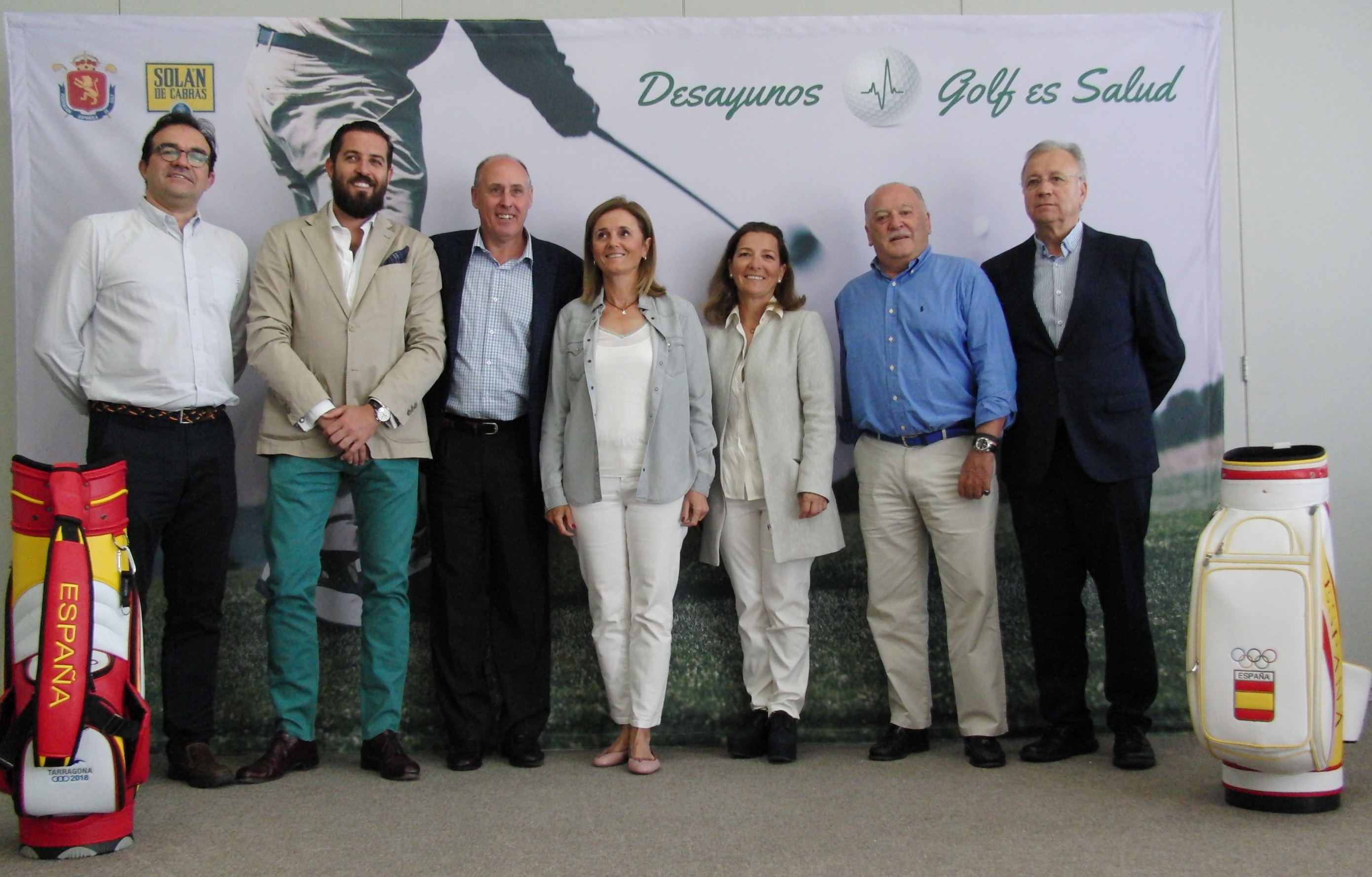
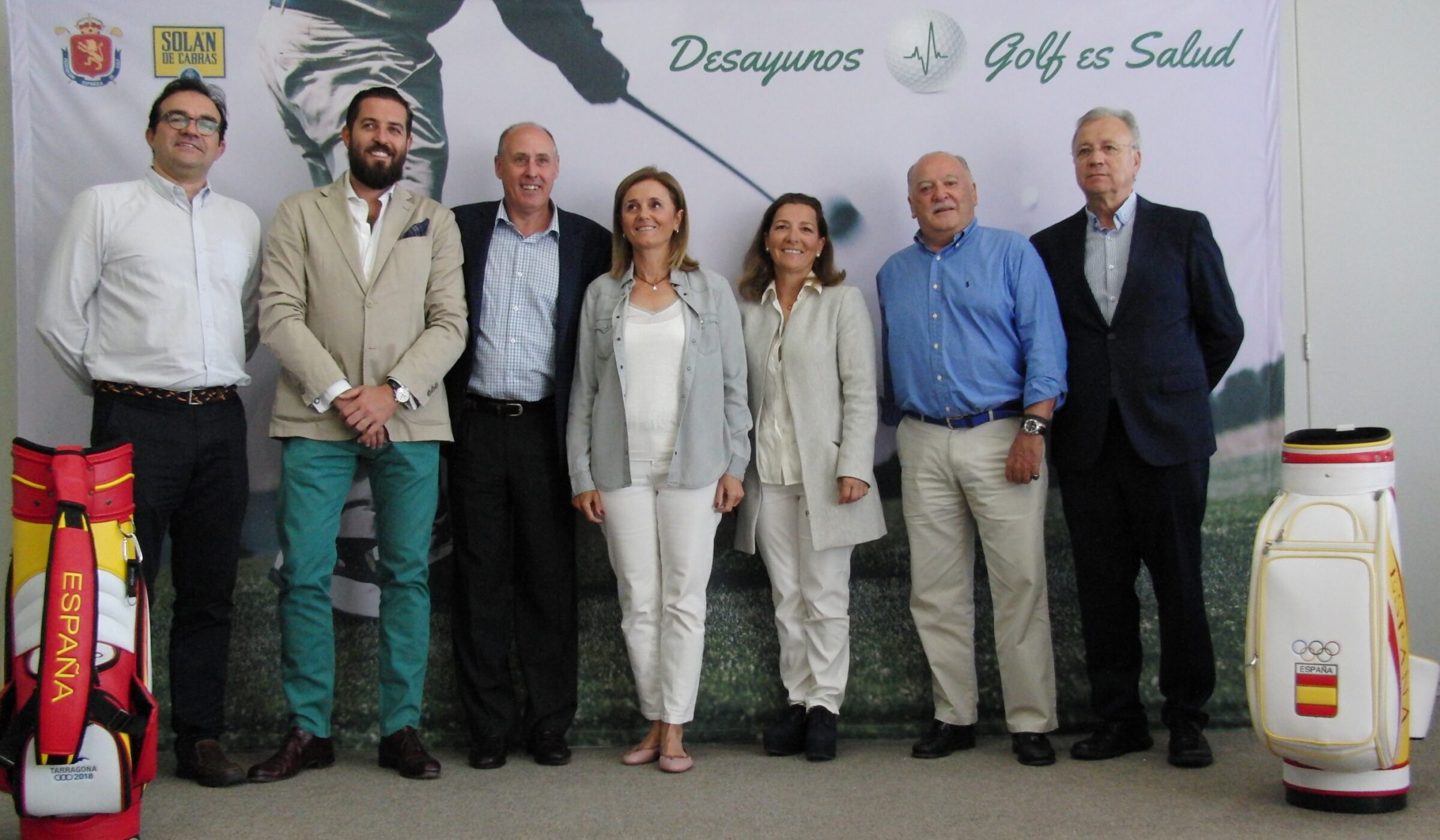
The Royal Spanish Golf Federation, in partnership with Solán de Cabras, hosted another session of the "Golf is Health" Breakfasts, a roundtable discussion featuring renowned medical specialists who explored the health benefits of playing golf. This time, the focus was on gynecologists, who addressed topics of interest such as playing golf during pregnancy and the effects of menstruation during competition.
Once again, journalist Guillermo Salmerón was in charge of presenting the event and setting the scene for the attendees, all of whom came from two backgrounds: gynecology and high-level sports.
Dr. José Antonio García Donaire, a renowned nephrologist and medical director of the conference, presented the famous study conducted by Professor Andrew Murray of the University of Edinburgh, which details the health benefits of golf. “It’s a sport that involves many hours of exercise and social interaction, and it’s an activity that helps combat the ailments that plague our society,” he explained.
“There is a large and growing elderly population in Spain, and we need to keep these people active. What could be better than sport? No. Physical exercise is a fundamental preventative activity to avoid diseases that are very prevalent today. Contrary to popular belief, golf is a sport in which you burn a lot of calories,” he commented by way of introduction.
Getting down to specifics, José Antonio García Donaire presented the case of a meta-analysis conducted in Sweden, which included a sample of 300,000 people of different ages. The study determined that golfers live approximately five years longer, a significant finding. “Breast cancer rates are reduced by 20%, but in this case, not strictly due to playing golf, but rather due to the general practice of sports,” he explained.
Next, Adriana Zwanck, a professional golfer, spoke about her experience playing at a high level while pregnant. “At first, you're more apprehensive, but you loosen up and it feels great. My theory is that when you're used to the activity, it's easier. There are women on the LPGA who play until they're eight months pregnant,” she said.
In this regard, Macarena Campomanes, one of the best Spanish amateur golfers of all time, added that she even played in a tournament shortly before one of her children was born. “I felt great. It wasn't a problem at all; the problem for me would have been staying home,” she said.
How does menstruation affect a golfer's professional activity?
Journalist Carmela Fernández-Piera participated in the event via a video in which she explained how menstruation affects a professional female athlete. “Many of the girls tell us that during those days they feel less focused and much weaker. Some try to mitigate these effects with a specific diet monitored by a nutritionist,” she said.
No one is better suited than Mar Ruiz de la Torre, President of the Women's Amateur Technical Committee (CTAM) and captain of the National Teams on many occasions, to describe how the players experience these moments. “These days there is much more information. But there's a wide range, from very young girls who come very well-informed to others in their 20s who have barely been to a gynecologist. What they all do know is what they can and cannot take to avoid testing positive in a doping control,” she pointed out.
At this point, Dr. Rafael Navazo, a specialist in Gynecology, intervened, reminding everyone that care must be taken when monitoring menstruation. "Professional athletes need specific treatment, but with caution," he noted.
In this regard, Dr. Jackie Calleja, also a gynecologist, recounted the case of a Chinese athlete who lost an Olympic medal due to the effects of menstruation, and lamented that many professional athletes are unaware that specific treatments can control their periods. “There are many more hormonal medications than before, but we must be very careful with their use,” added José Antonio García Donaire.
Adriana Zwanck also contributed her perspective as a professional golfer. “I think the issue of menstruation has never been given the importance it deserves, since during those days you can only take ibuprofen because you could test positive in a doping control. We've had cases of players with heavy menstrual bleeding who don't have a bathroom to change at the course,” she lamented.
For his part, Dr. Luis Feijóo Rodriguez, Head of the Gynecology and Obstetrics Department at the Cemtro Clinic, introduced another factor into the debate: stress. “It has a significant impact on adult women, on girls—we see this with the obsession with maintaining their figure or girls who exercise beyond what is recommended—and on pregnant women, let's not forget.”.
Luis Feijóo Rodriguez candidly admitted that when he was asked to speak about golf and gynecology, he wasn't quite sure where to begin. “And I was overwhelmed by the amount of interesting information available on the subject. It occurs to me that we could suggest to all these women of a certain age who are advised to walk briskly with walking sticks that they try replacing the stick with a golf club. It's our duty to broaden our horizons and those of our patients,” he remarked.
Golf after pregnancy
“How long does it take to return to playing golf after giving birth?” The question gained traction in the discussion. Adriana Zwanck confirmed that she was hitting the ball again within fifteen days, following a natural birth. Macarena Campomanes agreed, adding that things change when the birth isn't natural: “Then everything is quite different.”.
Of course, the age at which women have children also plays a role. “Women now tend to recover faster, as they take much better care of themselves and are more active than before, especially in urban areas. Furthermore, they have brought motherhood much closer to menopause,” added Jackie Calleja.
Taking up this challenge, Rafael Navazo emphasized that menopause has no impact on athletic performance. “You can continue practicing just the same. Furthermore, those who have been athletes may experience fewer of the usual effects,” he stressed.
Jackie Calleja spoke again to reinforce the idea that the benefits of exercise for women are present at all stages of life, not just during pregnancy. “It has the greatest impact during perimenopause, as it helps prevent a sedentary lifestyle at a crucial time. Pregnant patients today are more apprehensive, they're older. They benefit greatly from exercise, but sometimes they themselves create barriers for fear of something going wrong. We doctors should be proactive with them, recommending exercises like golf, since it's outdoors, in a group, low-impact, and requires concentration…,” she explained.
Macarena Campomanes shared her experience as a senior player. “In recent years I’ve intensified my physical training, working on flexibility and speed, and I’ve noticed a big difference. I’m better, I’ve gained distance, and, even more importantly, I’m noticing it in all areas of my life,” she explained.
“My mother, at 83 years old, still plays golf and padel!” added Mar Ruiz de la Torre.
José Antonio García Donaire closed the event with a thought-provoking reflection: “In medical school, we aren't taught how to prescribe exercise. We study the different specialties, but they don't tell us how important and beneficial sports are. Golf meets all the requirements to be prescribed safely,” he concluded.
Gynecology, the sixth specialty to be featured at the Golf Breakfasts is Health
It is worth remembering that Gynecology is the medical and surgical specialty that treats diseases of the female reproductive system (uterus, vagina and ovaries).
Previously, these "Golf is Health" Breakfasts had featured leading medical experts in fields such as cardiology, traumatology, dermatology, pediatrics, and neurology. And in all these sessions, the conclusion was always the same: due to its health benefits, golf should be prescribed.
PARTICIPANTS:
Dr. José Antonio García Donaire: Nephrologist. European Specialist in Hypertension and President of the Madrid Society of Arterial Hypertension.
Dr. Jackie Calleja: Gynecologist. Director of the Bmum Medical Center.
Dr. Luis Feijóo Rodriguez: Head of the Gynecology and Obstetrics Department at the Cemtro Clinic. For the past several years, I have been a member of the National Group of Experts in the medical treatment of uterine fibroids.
Dr. Rafael Navazo: Doctor of Medicine and Surgery from the Complutense University of Madrid and specialist in Gynecology. Professor at the Complutense University of Madrid. Founder of GINEGOLF.
Mar Ruiz de la Torre: President of the Women's Amateur Technical Committee (CTAM) of the Royal Spanish Golf Federation.
Macarena Campomanes: Golfer. 18-time Spanish Champion, World Team Champion, and European Champion. One of the best amateur players in the world. Former President of the CTAM (Madrid Golf Confederation).
Adriana Zwanck: Golfer. Holds a degree in Communications and a diploma in Philosophy from Saint Louis University. Member of the Spanish National Teams.