
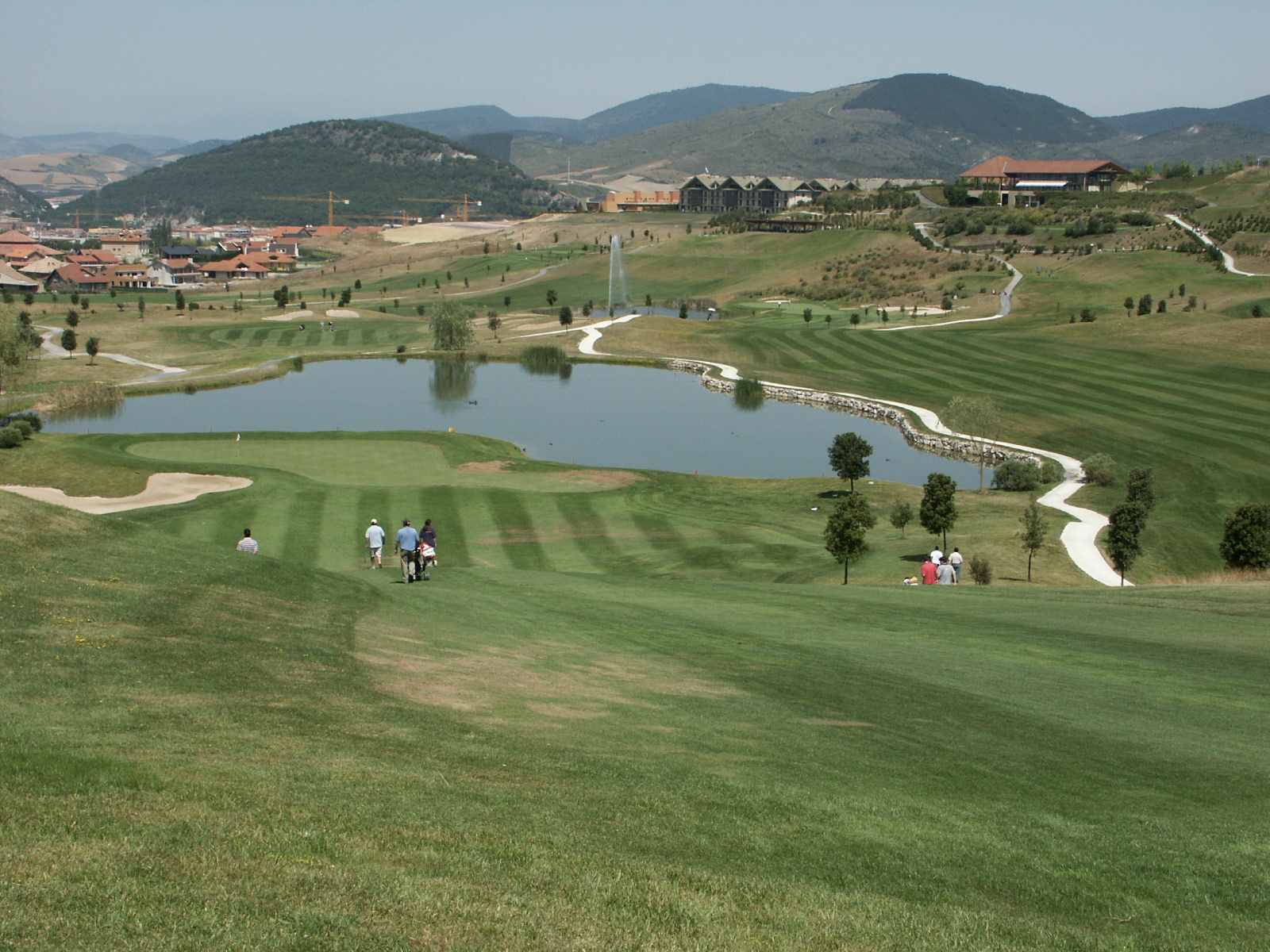
The Royal Spanish Golf Federation, through its Technical Green Committee, presented on October 1st the RFEG Environmental and Construction Guides, three books in total that respond to the growing demand for information on these key issues for the Spanish golf sector.
Co-published by the Higher Sports Council and this federative body, the event, held at the Cuzco Hotel in Madrid, was attended by numerous personalities from this sport, which from this moment on has 3 Manuals of an informative and educational nature –not regulatory– related to the construction and environmental and water management of golf courses.
These Guides are specifically aimed at professionals and specialists in the sector (greenkeepers, designers, builders, etc.), who now have an additional reference work in Spanish that covers a wide range of information. Indeed, the development of these Environmental and Construction Guides by the RFEG (Royal Spanish Golf Federation) required a year and a half of data collection, research, and the contribution of original content and expertise.
Prestigious bibliography
A wealth of literature from national and international experts of recognized relevance and prestige has been reviewed before including the final conclusions in a text that is eminently informative and educational.
It is important to emphasize that these Manuals are not legally binding. The explanation is simple: the construction and maintenance of golf courses are governed by extensive and diverse legislation that falls under the jurisdiction of different public administrations depending on their location. Furthermore, the range of circumstances affecting the construction and maintenance of a golf course is enormous due to the direct influence of numerous variables (climate, soil type, water availability, etc.), making it difficult to create a single set of regulations applicable to all golf courses in Spain.
These Guides, which could be considered a pioneering project in Spain due to their scope and content, were created as a research project with the aim of promoting the sport of golf, providing information that helps in the development of the most appropriate construction and maintenance strategy for each specific project.
The first volume, entitled 'Golf Course Construction', focuses on the design and construction methods of golf courses, taking into account that there are no fixed rules and that it is necessary to adapt to each situation and project, without falling into the temptation of thinking that what is valid in one place is equally valid in another.
A whole series of basic concepts are reviewed throughout its pages, focusing especially on those fundamental points that allow the establishment of coherent tactics and work plans that subsequently result in cost reduction.
Ethics and environmental respect
With the same objective, the other two books are presented – 'Water Management in Golf Courses' and 'Environmental Management in Golf Courses' – which will contribute from now on to making the best possible environmental decisions that ensure sustainable development, all based on ethics and environmental respect for the surroundings where the golf course is located, as well as managing and making better use of the water resources of the same.
Learning to select potential water sources and understanding their characteristics are some of the aspects covered in the book 'Water Management', while the volume dedicated to the environmental management of golf courses provides a series of concepts to optimize the processes included in the ISO:14001 Environmental Management Systems and 'Committed to Green'.
Not surprisingly, the implementation of these Management Systems in Spanish and European golf courses – both newly created and existing ones – has been one of the primary objectives of the Royal Spanish Golf Federation in recent years, aware that the commitment to quality, both in the construction phase and in subsequent maintenance, is the foundation of the future.
In any case, everything suggests that these Environmental and Construction Guidelines will need to be revised in the medium to long term. The use of new technologies and the application of new golf course concepts will be variables to consider in the coming years. However, until that time comes, the RFEG's Environmental and Construction Guidelines constitute a crucial advisory resource for all these types of issues.