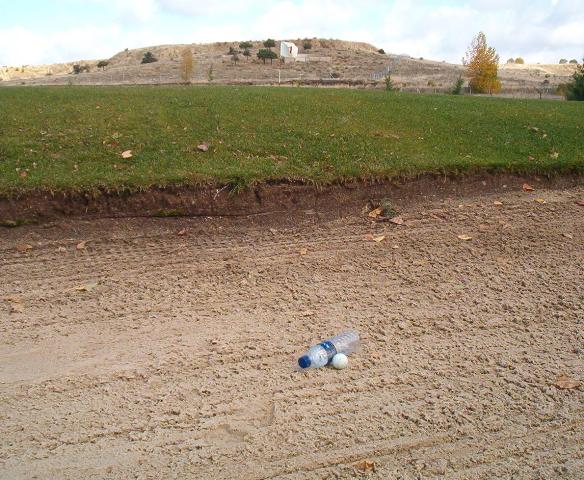
This article will explain, in simple terms, how to deal with loose impediments and movable obstructions when the ball is in an obstacle, as well as the procedure for identifying the ball within the obstacle. To do this, it is necessary to understand the definitions provided in the Rules Book.
Loose Impediments
“Loose impediments” are natural objects, including:
– stones, leaves, small wood, branches and the like
– excrement
– earthworms, insects and the like; and waste and small piles
formed by these, provided they are not:
– fixed or growing,
– solidly embedded or
– attached to the ball
Sand and loose soil are loose impediments on the green, but not everywhere else.
Natural snow and ice, other than frost, are either accidental water or loose impediments at the player's choice. Dew and frost are not loose impediments.
Obstacles
An “obstacle” is any bunker or any water obstacle.
Obstructions
An “obstruction” is anything man-made, including man-made road and highway surfaces and edges, and manufactured ice, except:
a) Objects that define the out-of-bounds area, such as walls, fences, stakes and gates;
b) Any part of an immovable artificial object located outside limits; and
c) Any construction declared by the Committee as an integral part of the field.
An obstruction is movable if it can be moved effortlessly, without unduly delaying play and without causing any damage. Otherwise, it is an immovable obstruction.
Note: The Committee may establish a Local Rule to declare a movable obstruction as an immovable obstruction.
See practical examples below, in the Related Links section