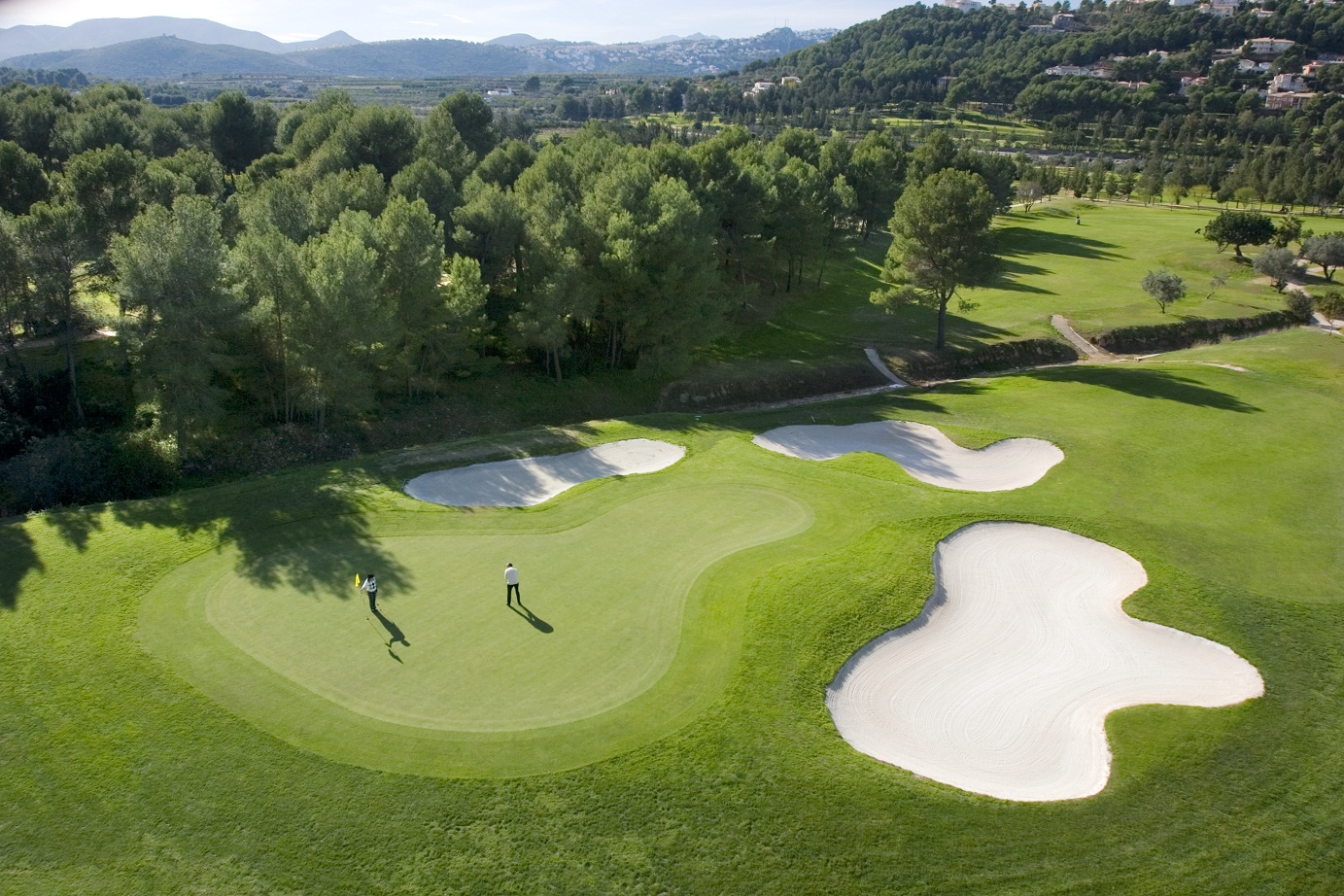
A golf course, specifically La Sella, located in the Alicante town of Denia, is the natural habitat of a type of long-fingered bat, specifically the Myoits capaccini, classified as an "endangered" species.
The greater mouse-eared bat is a species native to aquatic habitats, specializing in capturing prey on the water's surface. Currently, these habitats are severely degraded in the Denia area, with very low flows in rivers and streams, as well as large areas of former wetlands that have dried up.
In this context, the lagoons located in the La Sella golf course constitute an important contribution to the habitat of the species, where it hunts varied aquatic fauna, from abundant chironomid mosquitoes and other aquatic arthropods to fish of the genus Gambusia.
This circumstance highlights the importance of golf courses – in this specific case La Sella Golf – as reserves of high ecological value.
Within the framework of a research project funded by the Ministry of Science and Innovation, developed by researchers from the Doñana Biological Station (CSIC), the Zoology Museum of the University of Copenhagen and the Department of Zoology and Animal Cell Biology of the University of the Basque Country UPV-EHU, several lactating females of the aforementioned long-fingered bat Myoits capaccini, which is in danger of extinction, were marked and monitored by radiotelemetry.
The monitoring of these animals revealed the existence of long-fingered bats in the Cova de la Punta de Benimaquia and that they use the area around the La Sella golf course as a hunting ground, particularly the lagoons and ponds located there.
Living exclusively in caves, the long-fingered bat –an endangered species– uses caves, mines, tunnels, etc. as shelters, always near wetlands such as rivers, reservoirs, ditches or irrigated areas.
The study developed by researchers from the Doñana Biological Station (CSIC), the Zoology Museum of the University of Copenhagen and the Department of Zoology and Animal Cell Biology of the University of the Basque Country UPV-EHU has been published in prestigious research journals, which highlights the importance of this fact.
In addition to the natural environment of the La Sella golf course, colonies of this species of long-fingered bat have been found in the Amaseno Valley, in Italy, and in Kibbutz Hezorea, in Israel.