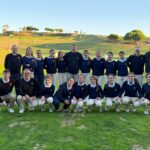
As part of the activities planned for the pilot phase of the Biogolf Project, three pairs of European pond turtles from the GREFA Center for the Recovery of Endangered Species and four barn owl chicks were released at the National Golf Center using the hacking method. The event was attended by Juan José Cerrón, Director General of the Environment for the Community of Madrid.
In the case of the owls, these are young individuals that have not yet completed their development and come from the captive breeding programs that GREFA is carrying out.
The Biogolf project consists of the implementation of a series of activities, planned from the initial analysis or diagnosis of the existing biodiversity, and the level of eco-efficiency in the management of the golf course in question.
Once the established timeframe for implementing the defined activities has elapsed, an evaluation of the results is carried out to assess the achievement of the set objectives and goals. If the results are positive, the golf course obtains the Biodiversity Certification Seal and/or the Eco-efficiency Certification Seal, with a commitment to continuous improvement.
This project proposes to enhance the use of golf courses in the Community of Madrid as centers for biodiversity production, while simultaneously mitigating their potential adverse effects.
This release of species is part of the experimental phase of the project, which is being carried out in five golf courses in the Community of Madrid, in order to define in as much detail as possible the actions to be developed, in a wide range of circumstances and characteristics.
The golf courses that are part of the pilot phase are the following: Real Club de Golf La Herrería, Club de Golf El Encín, Club de Golf Aranjuez, Club de Golf Lomas-Bosque and Centro Nacional de Golf.