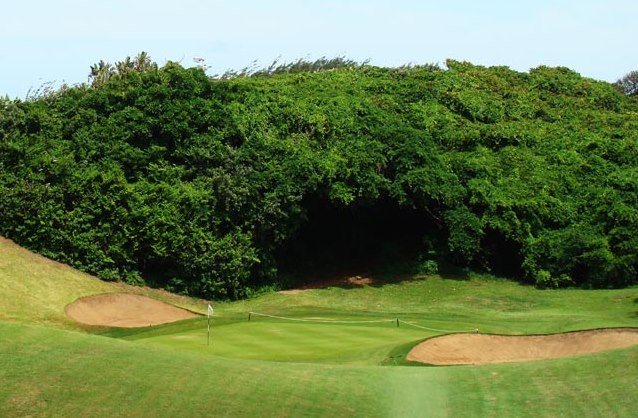
The Durban Country Club in Natal was scheduled to host the South African Open, to be held over four days of 18 holes each, from Thursday to Sunday, with 156 players during the first 36 holes and the 65 best ranked players and those tied for that position playing the last 36 holes.
However, the weather disrupted these plans. Thus, on the first day of the championship, play lasted only two and a half hours, and only two groups were able to complete nine holes. On Friday, only the first round of 18 holes could be completed, with the second 18 holes played on Saturday.
Reduction in the number of players
This meant that the remaining 36 holes would have to be played on Sunday, so the Committee decided that, in order to do so, the number of players on the course would have to be reduced from the planned 65 first and tied players to the 50 first and tied players.
The number of players who make the cut is part of the Conditions under which a competition is played. As a general rule, these conditions should not be changed once the competition has started. Indeed, Decision 33-1/1 states that “once a competition has started, the conditions should only be altered in exceptional circumstances.”.
It is clear that what happened at the South African Open was an exceptional circumstance. Furthermore, the European Tour's internal rules anticipate the possibility of such an exceptional circumstance occurring, and according to them, if the final 36 holes have to be played on the last day of competition, the cut will be reduced to the top 50 and ties, as was the case.
Reduction in the number of holes
But that wasn't the end of it. Bad luck, or rather persistent bad weather, meant that on Sunday morning, before the start of the third round, the tournament officials found the 4th green flooded. After waiting for the situation to be resolved before the start of play, without success, the Tournament Committee had to make a curious and unusual decision: the Committee decided that the 4th hole would not be played during either the third or fourth round, thus reducing the final 36 holes to 34, with two rounds of 17 holes each.
According to the Definition of a Stipulated Round, it “consists of playing the holes of the course in their correct sequence, unless the Committee authorizes it otherwise. The number of holes in a stipulated round is 18, unless the Committee authorizes a smaller number,” as in this case the Tournament Committee did, authorizing two final stipulated rounds of 17 holes.
It is important to highlight that the reduction of the stipulated round occurred before any player started the third round because, according to Decision 33-1/2, which deals with the reduction of the number of holes during the course of a stroke play competition, “the Committee has no authority to reduce the number of holes of a stipulated round once it has begun.”
If a player starts a stipulated round, which the Committee has set at 18 holes, the Rules do not allow this round to be reduced to 17 (or nine) holes, however extraordinary the circumstances may be.
If you want to know what powers the test committee has under the Rules, take a look at the Rules Section from the website.