

MILESTONES IN THE HISTORY OF SPANISH GOLF
First chapter below, in the Related Content section.
. Costa de Azahar, in Castellón, with nine holes, became the first Spanish public course to open its doors in 1960, and has since been known for its outstanding talent pool.
. The Villa de Madrid Country Club hosted the 1965 World Cup, where a huge crowd marked the first realization of golf as a mass sport in our country.
Milestones are defined as specific yet significant events that mark an important moment in the development of a process or in a person's life. The broader and richer the history, the greater the number of milestones it contains, reinforcing a sense of glory that, in the case of sports in general and golf in particular, becomes increasingly appealing.
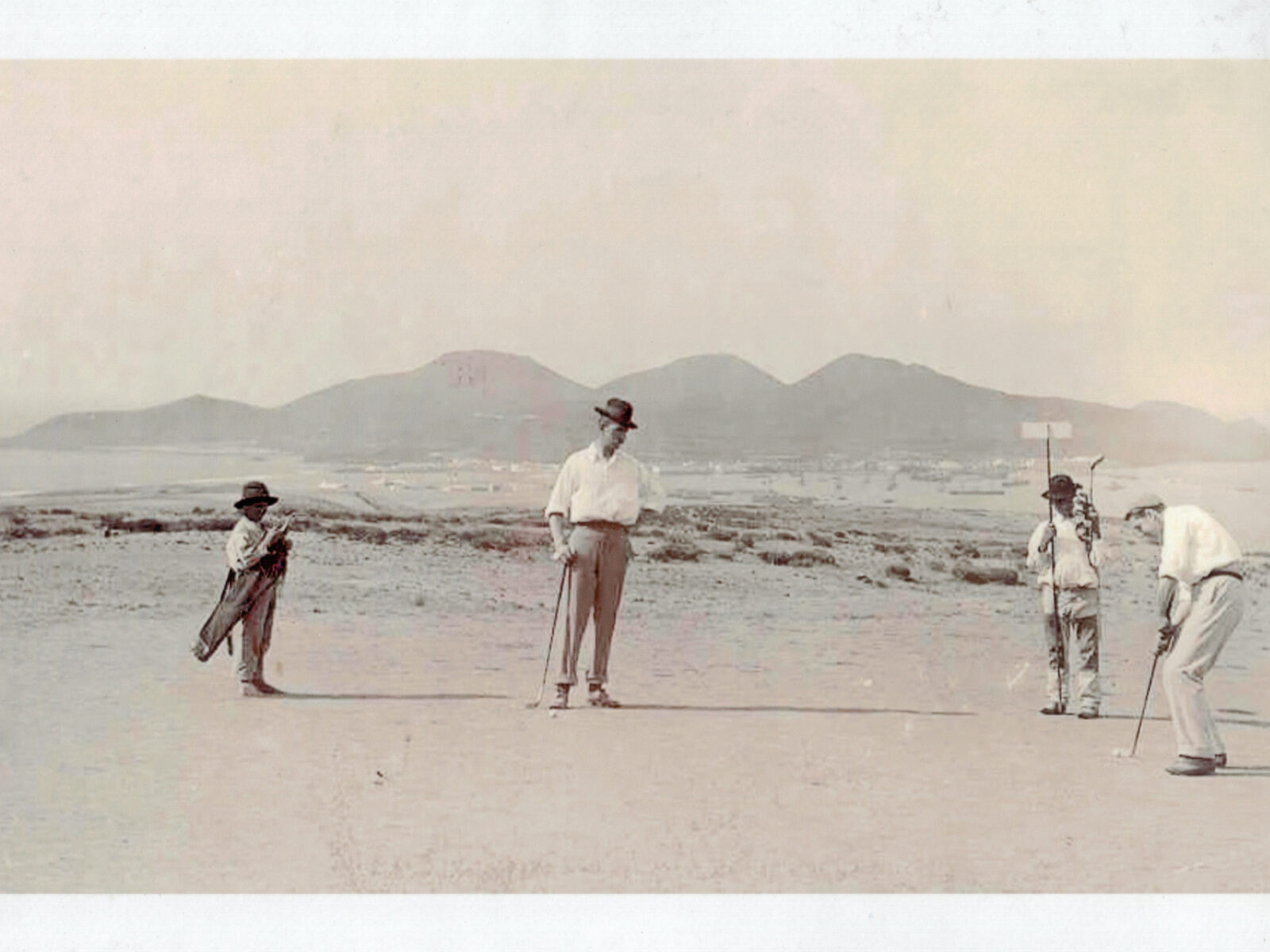
The founding of Las Palmas Golf Club in Gran Canaria in 1891, the first golf club inaugurated in our country; the oldest tournaments in Spain; the creation of the Federation of Golf Clubs of Spain in 1932, the current Royal Spanish Golf Federation; the first master's license given to a woman, Elvira Larrazábal… were some of the milestones reflected in the previous issue of this publication.
Following that line of thought, the following highlights some of the most representative milestones in the long and prolific history of golf in Spain. Of course, there are many more that could certainly be included in this report, compiled for posterity, but all of them reflect the dynamism of a sport that has always strived to grow.
1960 – Costa de Azahar, first public field
Costa de Azahar, in Castellón, with its nine holes, has become the first public golf course in Spain to open its doors. Many years had to pass before this essential step could be taken for the expansion of golf in our country. Throughout these years, Costa de Azahar has distinguished itself as an outstanding breeding ground for our sport, thanks to a golf academy that serves as a renowned example for all.
1961 – The RFEG has its own premises for the first time
The governing body that regulates golf in our country is leaving the private residence of the Secretary General, Enrique Meijide, and moving to offices on Madrid's Gran Vía.
1962 – The RFEG promotes classes for children
The first initiative to promote golf among young people, fully aware of the need to involve children to secure the future of the sport in our country, was launched by providing grants to six clubs. The initial funding for this promotional measure was 37,000 pesetas (just over €200 today).
1963 – Luis de Urquijo y Landecho, President of the EGA
The federation president was elected President of the European Golf Association at the Assembly held for that purpose in Paris. The election provided a new impetus for Spanish golf and recognition of the work carried out in our country in a sport dominated until then almost entirely by the British Isles and the Nordic and Central European countries.
1965 – The World Cup, a major event in Madrid
Gary Player, Jack Nicklaus, and Roberto de Vicenzo participated in an event that was a resounding success in every respect. The Club de Campo Villa de Madrid hosted the event, introducing golf to many people previously unfamiliar with it. A massive crowd thronged the fairways and greens of the renowned Madrid course, marking the first realization of golf as a mass sport in Spain.
1967 – The prestigious John Jacobs begins his love affair with Spain
The RFEG (Royal Spanish Golf Federation) made a significant financial investment to bring one of the world's most prestigious coaches to Spain for two weeks – one week at El Prat Airport and the other at Puerta de Hierro Airport. This marked the beginning of a long and fruitful relationship that solidified the idea of the importance of training for achieving great success. That initial seed has blossomed over the years, making this aspect a central pillar of sports development in Spain.
1968 – The RCG Puerta de Hierro, the first course with 36 holes
The Madrid club adds nine more holes to its course to become the first in Spain with 36. That same year, another emblematic course, El Saler, owned by the Ministry of Information and Tourism, was inaugurated. It opted for a facility capable of combining golf and tourism, a formula of undeniable success that continues to this day.
1969 – The RFEG moves to Capitán Haya
This represents another change of headquarters for this federation, reflecting new space requirements in response to a significant increase in federation activity. On December 3, 1969, the RFEG took another step in its expansion by moving to offices on Capitán Haya Street in Madrid, which were more spacious than their previous premises. This was the federation's home until the move in 2016 to the National Golf Center, its current and almost certainly permanent headquarters.
1971 – The 5,000 license mark is exceeded for the first time
Little by little, slowly but steadily, Spanish golf embarked on a path of growth, spurred by a modest increase in popularity that led it to surpass certain milestones. One such milestone occurred in 1971, when the number of registered players reached 5,332 on December 31st. This was the first of many barriers Spanish golf would overcome before approaching 300,000 registered players.
1972 – The 'independents' are born‘
The General Assembly of the Royal Spanish Golf Federation has agreed to grant 'independent' licenses to golfers who do not belong to any club. This was in response to a new need: to facilitate access to the sport for new players, who in the past were always linked to club membership.
1973 – The Women's Amateur Technical Committee is created
Juan Antonio Andreu, President of the Royal Spanish Golf Federation from 1968 to 1974, characterized his term by promoting the modernization of the federation's structures and working methods, giving it a more business-oriented and service-driven approach. One of the most noteworthy measures at the time, in an era when women's role was relegated to a secondary position, was the creation of the RFEG's Women's Amateur Technical Committee. He placed at its head a woman of equally compelling drive, Emma Villacieros, who years later would become President of the federation.
1975 – Spanish golf reaches the milestone of 10,000 licenses
In just four years, the number of registered members doubled, surpassing the 10,000 mark. For the first time, the number of licenses had to be written in five digits, but the most significant aspect was that this marked the beginning of the first boom in Spanish golf during its unstoppable process of popularization.
1976 – Spain wins its first World Cup
Severiano Ballesteros, 19, and Manuel Piñero, 24, gave Spain its first victory in this prestigious professional race, with the added merit of achieving it on American soil. A year later, Spain repeated its triumph, this time with Ballesteros again and Antonio Garrido. The third victory came in 1982, with Manuel Piñero and José María Cañizares as the protagonists, a prelude to a fourth in 1984, on that occasion thanks to the talent and effort of José María Cañizares and José Rivero.
1978 – The golf license becomes mandatory.
The General Assembly of the Royal Spanish Golf Federation has approved a measure that will positively shape the future of golf in Spain: the mandatory requirement for a golf license, an agreement endorsed by the Higher Sports Council. This measure, which came into effect in 1979, has since enabled numerous initiatives that have contributed to the progress of the sport.