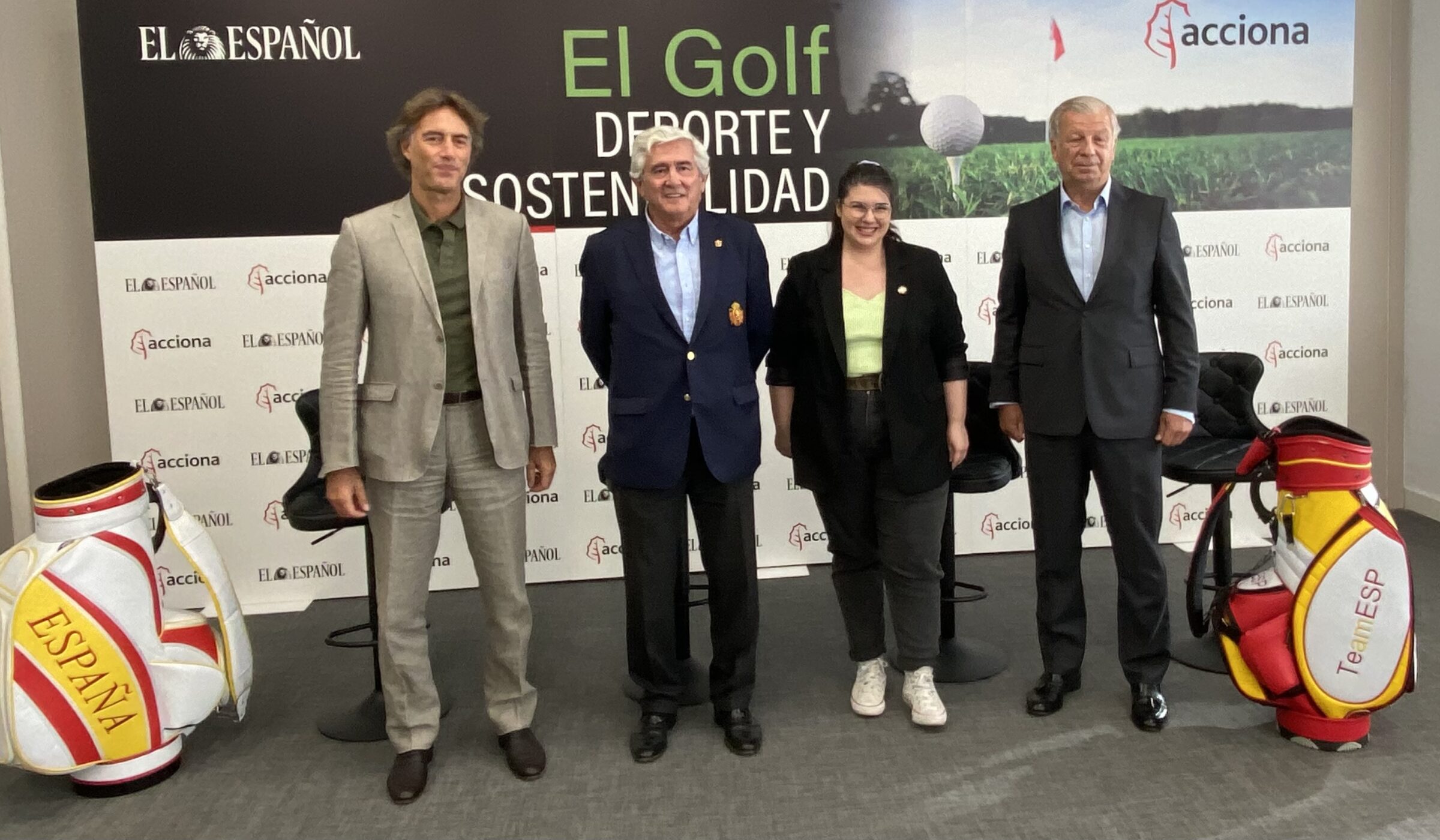
. The Acciona Open de España presented by Madrid is set to be one of the most sustainable sporting events of the season.
Next October, from the 6th to the 9th, the ACCIONA Open de España presented by Madrid will be held in Madrid, a competition that, in addition to being one of the most important golf tournaments in our country, has a firm commitment to sustainability.
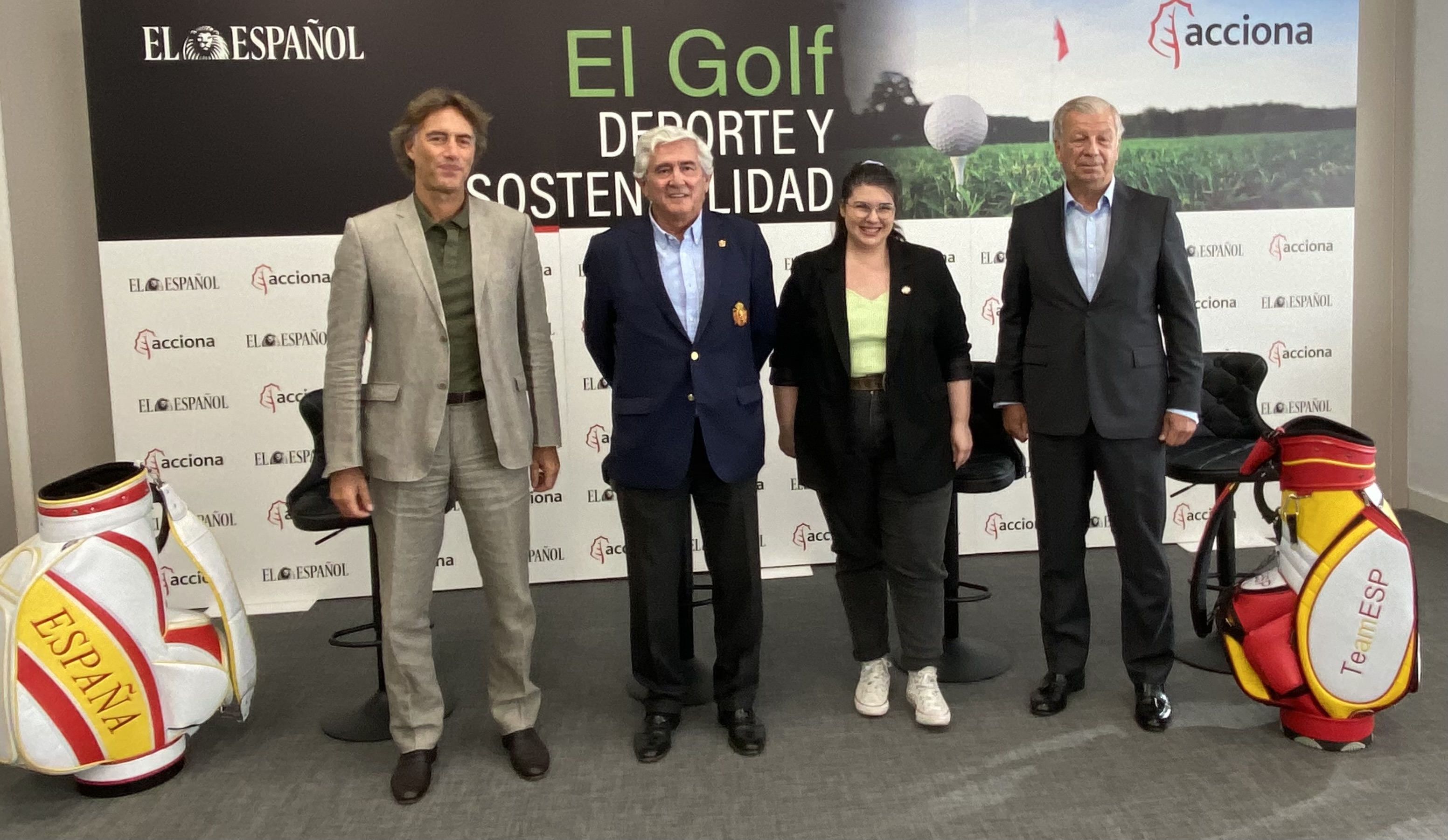
To discuss this issue, the digital newspaper El Español and Acciona collaborated in holding a meeting at the headquarters of the Royal Spanish Golf Federation, in which Gonzaga Escauriaza, president of the RFEG; Gerard Tsobanian, CEO of Madrid Trophy Promotion and president of the Acciona Open de España; and Joaquín Mollinedo, general director of Institutional Relations, Communication and Brand of Acciona, participated.
The event began by highlighting the partnership between the Spanish Open and the sustainable energy company. “Thanks to the partnership with Acciona, we have been able to begin the process of becoming a sustainable event,” Tsobanian stated.
The Open president also highlighted the contributions of other partners in terms of sustainability. “Each of our sponsors contributes something,” he stated, explaining that “BMW provides the electric cars. This year we will only have electric cars.”.
In the case of Mahou and Solán de Cabras, their contribution will consist of ensuring that all beverage containers are plastic-free, thus enabling the Spanish Open to reduce the use of plastics.
Regarding the event's ability to raise awareness about the need to evolve towards a more sustainable world, Molinedo stated that "sport is a platform for values that serves very effectively to convey messages to society, and one of those messages is sustainability." Furthermore, he praised the initiative, since "it has succeeded in placing the importance of the sporting event and that of sustainability on the same level.".
For his part, Gonzaga Escauriaza drew attention to the fact that the National Golf Centre, where the RFEG is located, serves as a "showcase to show the different courses in Spain what things can be done to be more sustainable.".
Next, the President of the RFEG detailed some of the most important measures that have been carried out in the field, which is "sustainable on three levels: environmental, social and economic," he assured.
Regarding water consumption, Gonzaga Escauriaza explained that “we changed the irrigation system so that only the smallest plot is watered. Now we use much less water, and, moreover, it is recycled,” adding that “the practice field is made of artificial turf, specifically recycled turf that belonged to Real Madrid and which, in the future, can be used for another field.”.
Besides water consumption, another issue that has put golf courses under scrutiny concerns fertilizer use. In this regard, Tsobanian stated that they are in contact with a company that has developed bio-based fertilizers and that "the intention is to use this fertilizer at the Villa de Madrid Country Club to ensure clean soil.".
Throughout the meeting, the three participants repeatedly emphasized that the Spanish Open is not merely neutral, but rather “an event with a positive impact. We not only aim to avoid harming the environment, but also to regenerate and improve it,” stated Mollinedo.
This means that, in addition to offsetting the carbon emissions it generates, the Acciona Open in Spain absorbs more than it emits, so its impact on the environment is positive, and not just neutral.
At the end of the debate, the participants wanted to make it clear that sustainability is not expensive, as some argue, since, on the one hand, "renewable energies are more competitive than comparable ones.".
Furthermore, as Mollinedo commented, “we have to compare what sustainability costs us with the cost of not facing that challenge: that is absolutely priceless and we put at risk not only our economy, but the future and development of our societies.”.
RFEG measures to make golf facilities more sustainable
Gonzaga Escauriaza, for his part, gave a detailed overview of the measures implemented by the RFEG (Royal Spanish Golf Federation) to make its facilities an increasingly green space. “At our small level, we have always been very concerned about sustainability and the image that golf had, and perhaps still has. For a long time, we have used the National Golf Centre to demonstrate what can be done to be more sustainable. To begin with, we built a golf course on land that used to be a landfill. Now it is home to geese, ducks, and diverse wildlife.”.
“Furthermore, we have created a sustainable field in three aspects: the environmental, the social – with 80 jobs – and the economic, because we generate wealth. That is our showcase,” argued the President of the RFEG.
“And we’ve gone even further, beyond changing the irrigation system to use less water, which is also reclaimed, and using recycled artificial turf on the practice range at the National Golf Centre. We’ve also installed solar panels and created a sustainable electricity grid that benefits many homes in the surrounding area,” he explained.
On the other hand, Gonzaga Escauriaza revealed the progress being made in the golf sector to replace chemical products with organic alternatives. “We are working with universities in this regard, and we are already seeing very interesting results. They are working on grass varieties that are better able to withstand diseases and, in this way, achieve zero use of chemical products,” he noted.
SOURCE: El Español and own