Every historical process goes through different phases, the equivalent of the dramatic triad of "exposition, rising action, and resolution," accompanied by the transitional rituals that structure them. When discussing the development of Spanish women's golf, it is essential to remember Elvira Larrazábal and those who paved the way, Marta Figueras-Dotti as the first great star to shine on both sides of the Atlantic, the excellence of so many Spanish golfers in individual and team amateur competitions, and players like Tania Abitbol, Xonia Wunsch, Amaia and Marina Arruti, all winners of international titles…
But the maturity of women's golf in Spain comes with a landmark competition, the Solheim Cup, created in 1990 by the LPGA Tour and the Ladies European Tour and supported by Karsten Solheim.
A call for the development of professional women's golf in Spain
The vindication of Spanish women's professional golf on the international stage came from two historical figures, Raquel Carriedo and Paula Martí, the first Spanish women to qualify for a Solheim Cup on their own merits after shining in the Ladies European Tour.
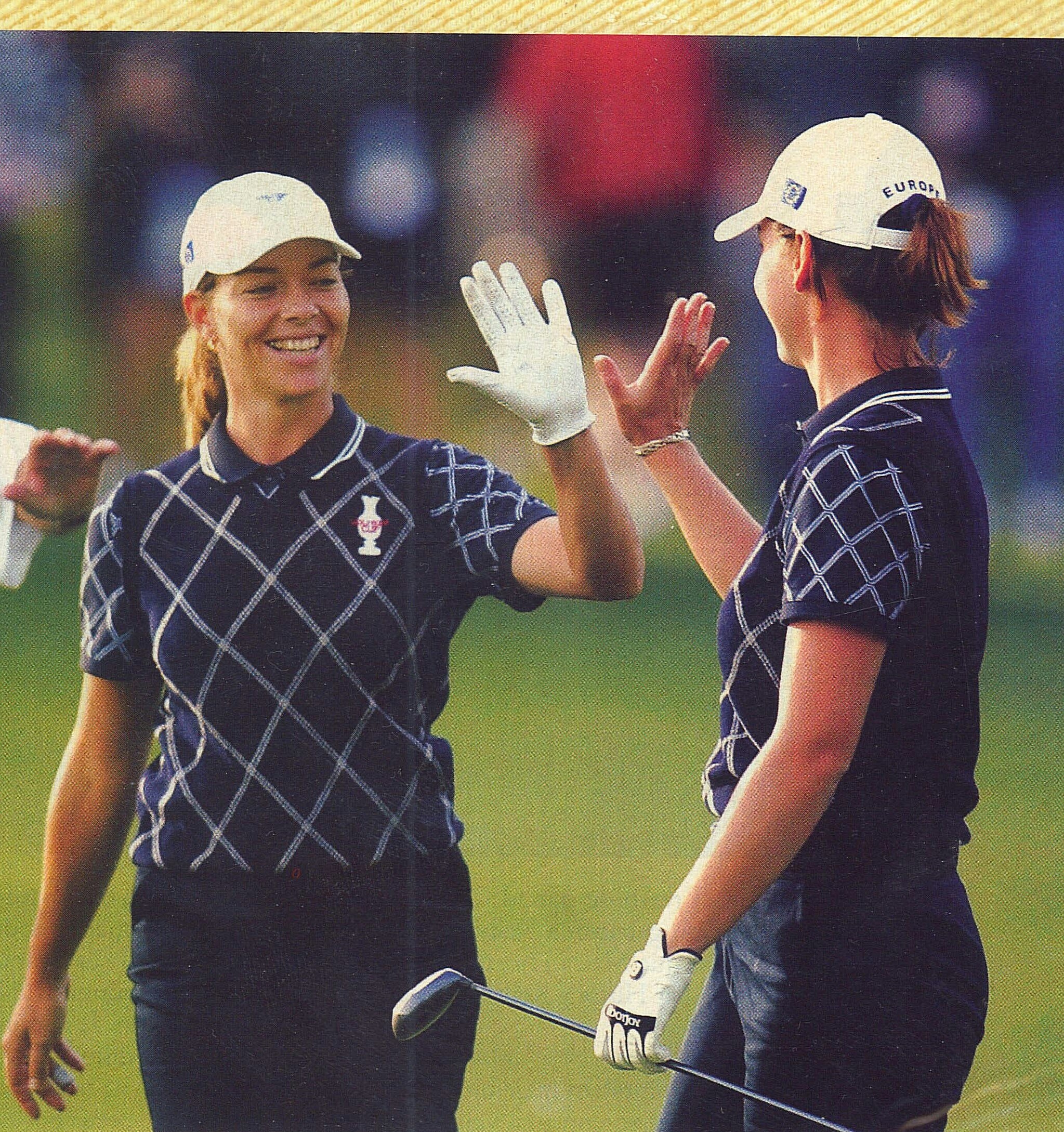
Just as the arrival of the Spanish marked a turning point in the Ryder Cup, ten years after the birth of the Solheim Cup, in 2000, there was a change of trend in the competition and a Spanish woman was the protagonist of that edition held in Loch Lomond, Scotland.
Europe had suffered four defeats in the first five editions, and the captain, local Dale Reid, introduced several changes: to those who had qualified on merit (the English players Trish Johnson, Laura Davies, and Alison Nicholas, the French player Patricia Meunier-Lebouc, the Spanish player Raquel Carriedo, and the Swedish players Annika Sorenstam and Sophie Gustafson), Reid added four more Swedes and her compatriot Janice Moody. And the changes paid off.
“I remember qualifying for the first Solheim without having won a single tournament yet. I had finished second many times, but I didn't have any victories under my belt and I felt out of place compared to the others,” recalls Raquel Carriedo.
“You always think it’s tough to beat the American team, but Dale Reid instilled strength and confidence in us at all times, telling us we could do it by fighting tooth and nail until the very end. He was very attentive to the rookies, those of us participating for the first time, who seemed more nervous and out of sorts. Laura Davies was the same. She was always looking out for me, very caring, and that calmed me down a lot. They treated us so well, like our own mothers… firstly because of our age, and secondly, because of our experience.”.
Raquel Carriedo played the first match for a Spanish woman in the Solheim Cup on the second day, in the fourballs round, partnering with Laura Davies against Meg Mallon and Beth Daniel. The player from Zaragoza earned her first draw, the first half-point ever achieved by a Spanish player in this competition, and despite the challenging conditions and having lost in the singles matches, she celebrated the European team's victory, the second in the history of the Solheim Cup.
“I remember finishing completely exhausted because it was incredibly tough due to the cold and rain. The physical and mental fatigue is etched in my memory, but I came away much stronger as a player. Thanks to the Solheim experience, you learn so much and gain a lot of experience. It helps you compete and perform better in tournaments where you feel more pressure,” recalls the player from Zaragoza.
That victory was also Annika Sorenstam's first. The Swede, who by then already had three majors to her name and had been the LPGA Tour's top player for three years, was undoubtedly a milestone in her illustrious career.
Paula Martí takes action
The equality between both teams was maintained in the following editions and, with Dale Reid still in charge, Europe arrived at the Interlachen Country Club in 2002 with new players such as Iben Tinning, Karine Icher, Maria Hjorth, Suzann Pettersen or Paula Martí, who accompanied Raquel Carriedo who was repeating in the team after shining in the 2001 season (in which she won the order of merit) and achieving several victories in the LET, and even coming close to victory in the US Women's Open of 2002.
“The Solheim Cup was a huge leap forward in my game and my career, a turning point. In the next Solheim, with more experience and victories under my belt, I played differently, less timidly and with more confidence and freedom. I felt capable of beating anyone,” recalls Carriedo, who shone in the fourballs on the second day, where she partnered with Karine Icher and faced a formidable pair, Cristie Kerr and Rosie Jones.
“I’ll always remember that match because I think it was the best match I’ve ever played. Christie Kerr came up to me midway through the second half and said, «We can juggle all we want, we’re not going to beat you today.» It’s one of those days when you have magic in your hands and you can score from anywhere…”.
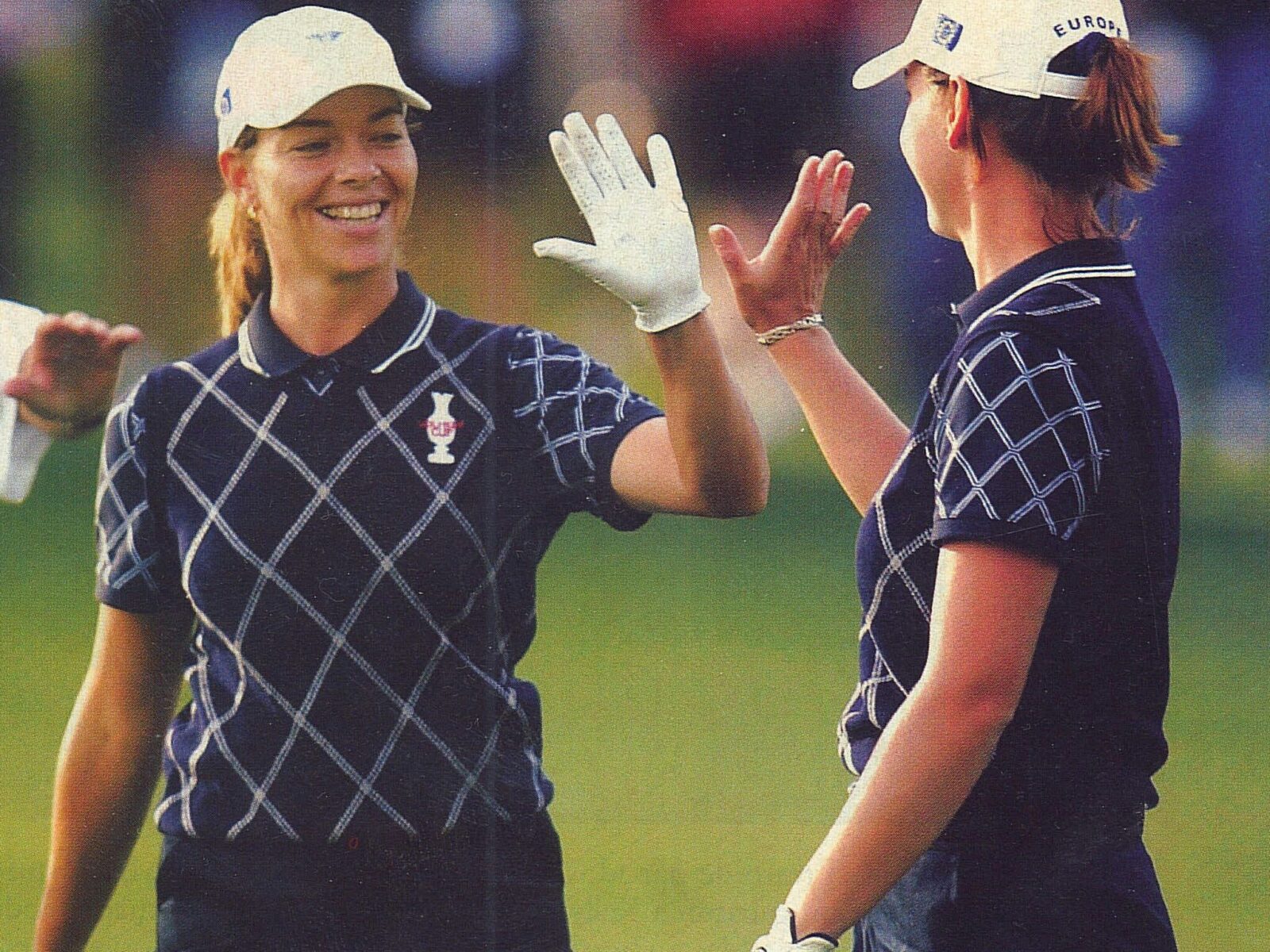
Paula Martí, for her part, made her debut in the competition in the best possible way, winning the first day of foursomes alongside Laura Davies against formidable rivals Juli Inkster and Laura Díaz, becoming the first Spanish woman to win a Solheim Cup match. A sensation right from the start.
“Playing in America is different because of the crowd's influence, but it was an amazing experience being part of that team. I also remember the captain telling me, «There are two players who want to play with you: Annika and Laura Davies,» which was quite a privilege… And I replied, «Since I'm a rookie, put me with whoever you want, I get along with everyone.» She paired me with Laura Davies and we made a great team. In fact, I've been on great terms with her ever since,” Martí explains.
“We finished with an eagle. Laura hit an inhuman drive on the 18th, and I hit a 3-wood that I left a meter from the hole. We finished the match, and Laura jokingly said to me, «Hey, you stole the show. You did everything yourself,» always with her characteristic irony,” the Spaniard recalls. “The more crowded and pressured the players are, the more motivated and better we get. You become better in those moments, and you rely on your partner, and Laura was a great support. I played all the matches with her as my partner, although I later lost the singles match against Laura Díaz. I think European women have always played very well as a team, but we were crushed individually… although that has changed.”
Indeed, in that edition the Americans used their individual superiority to secure the victory, but the competition remained close, and in the following edition held in Sweden in 2003, Europe once again emerged victorious. But let's not get ahead of ourselves…
Major media coverage for the first time
Another aspect that has changed is the Solheim Cup's media impact. Only a couple of decades have passed since those editions, but Martí and Carriedo have noticed the difference. Their presence on the European team had a significant impact, but nothing comparable to the current level of coverage.
“Although women’s golf wasn’t followed much at that time, I did have the feeling that we were doing something important and that doors were opening, since the news had an impact. I still have many clippings from back then; President Aznar sent me a telegram and then called me to play… Although it can’t be compared to the impact the Solheim Cup has now on television, some barriers were beginning to fall,” Carriedo recalls.
“Back then, we were more under the radar. The men's game already had the benchmark of the Ryder Cup that had been played in Spain, with players like Seve, Olazábal, Miguel Ángel Jiménez… but it was harder to get noticed when we women played. This has changed a lot, with social media and the amazing players we have now, like Carlota and Azahara, who are doing so much good for Spanish women's golf,” recalls Martí, who, after playing in Interlachen and narrowly missing out on making the team in 2003, was an assistant to Annika Sorenstam and Catriona Matthew in the 2017 and 2019 editions.
Both Spanish players agree on what they take away most from their time at the Solheim Cup. “The best thing about the Solheim Cup is the friendships you make there. Europe is a continent, not a country, and it should be easier for the Americans to achieve that. However, we Europeans managed to forge a great team spirit. I also have to remember the experience this competition gives you, which will stay with you forever,” Raquel Carriedo summarizes.
“Golf is so individual, we are so alone when we compete and travel the world, that the fact of supporting each other, sharing dinners, being all together, is reminiscent of the amateur era, when we shared teams,” agrees Paula Martí.
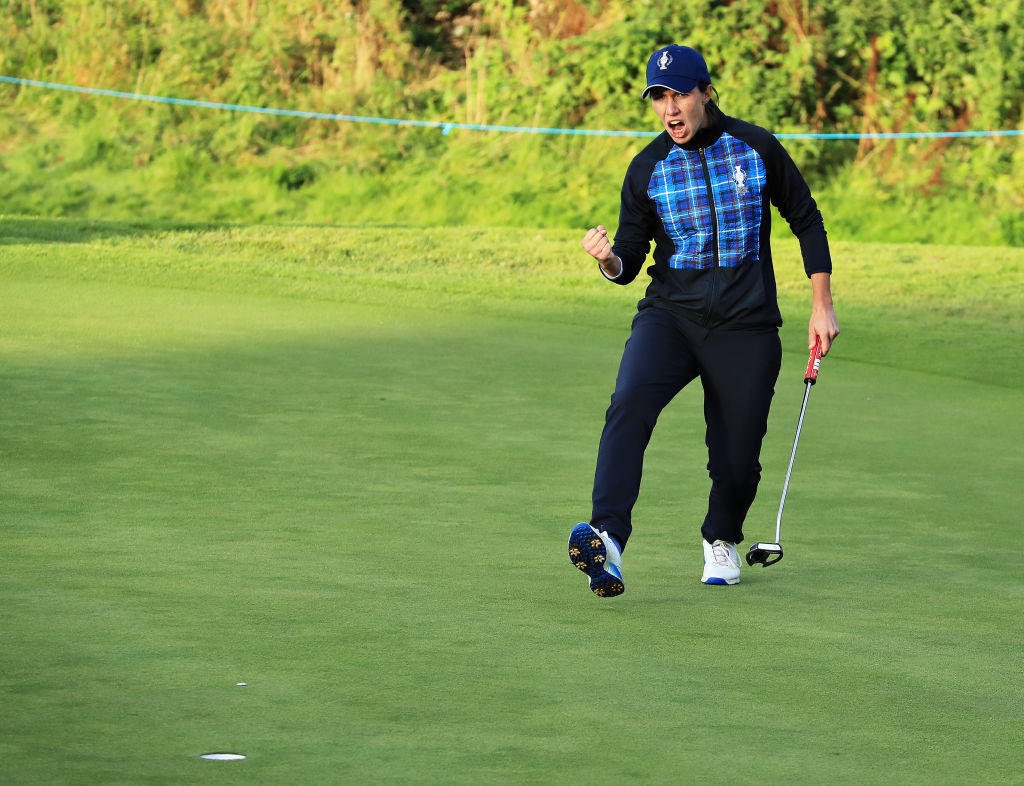
Both Carriedo and Martí also agree on the importance of the 2023 Solheim Cup for Spanish women's golf. More than two decades after they paved the way, the new generation of Spanish golfers, led by veterans Carlota Ciganda and Azahara Muñoz, will seek their place in history at Finca Cortesín.
“Now that we’ve won the Solheim Cup, we need to make some noise. We need to give the girls the fame and recognition they deserve. We hope that the two who are already part of the team, Carlota and Azahara, will be there, and that some of the younger players will join.”.
Younger players would do well to look back and remember the story of Raquel Carriedo and Paula Martí, golfers with brilliant careers who first carried the Spanish flag to the most important women's team competition in the world. In 2023, at Finca Cortesín (Costa del Sol, Andalusia), the new generations of Spanish players have the perfect opportunity to pay them a tribute they undoubtedly deserve.
By Óscar Díaz