“To be, or not to be, that is the question” (in English, to be, or not to be, that is the question), as we know, that is the first line of the monologue of the character Hamlet, from the play Hamlet, Prince of Denmark, written around the year 1603 by the English playwright William Shakespeare.
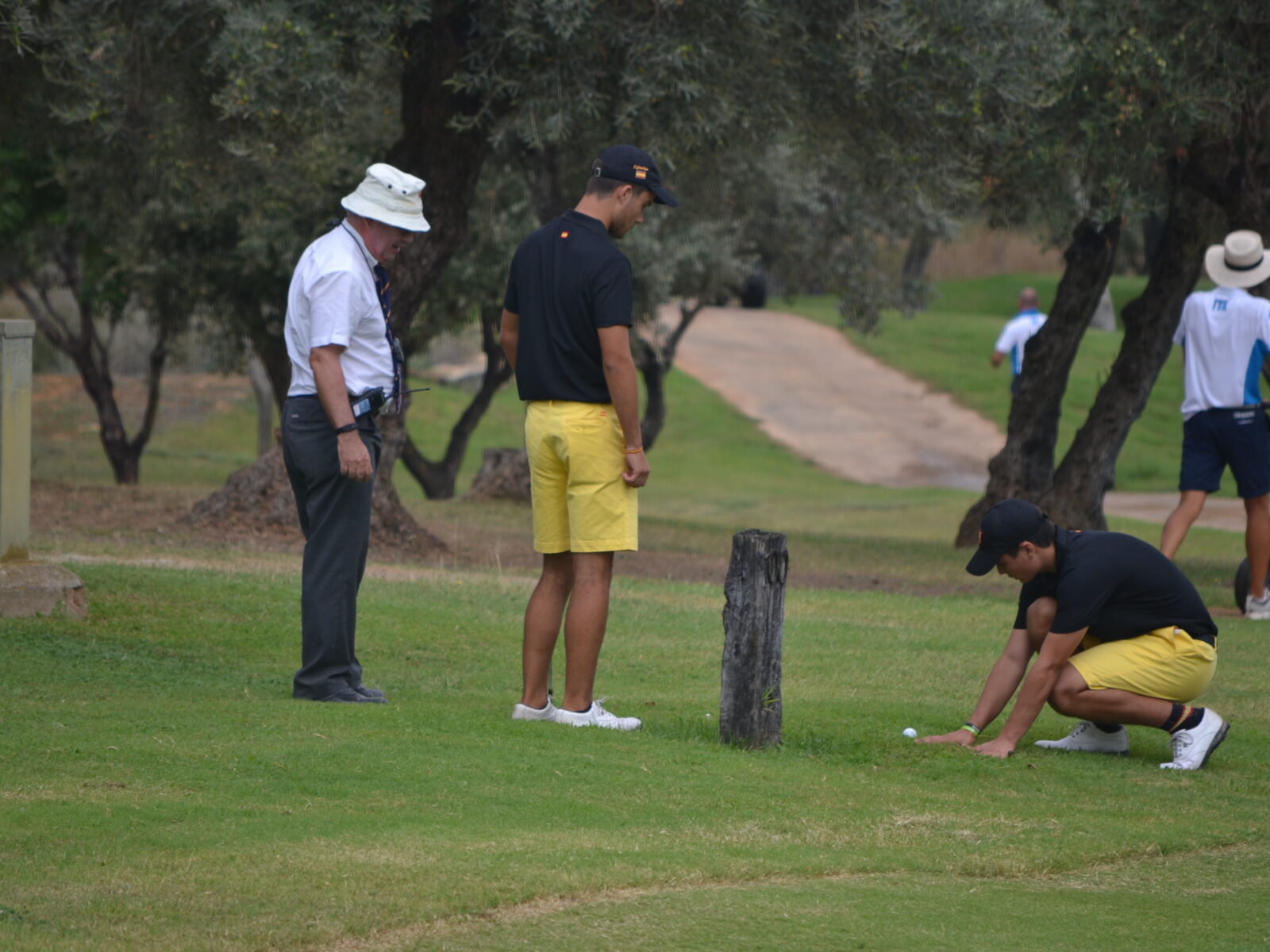
Undoubtedly, at first glance, it might seem that it has nothing to do with the title of this article, but in light of the recent embedded ball rulings that have taken place in various tournaments, we could understand why some players sometimes ask themselves during the game: "Is the ball embedded or not? That is the question.".
What is meant by an embedded ball?
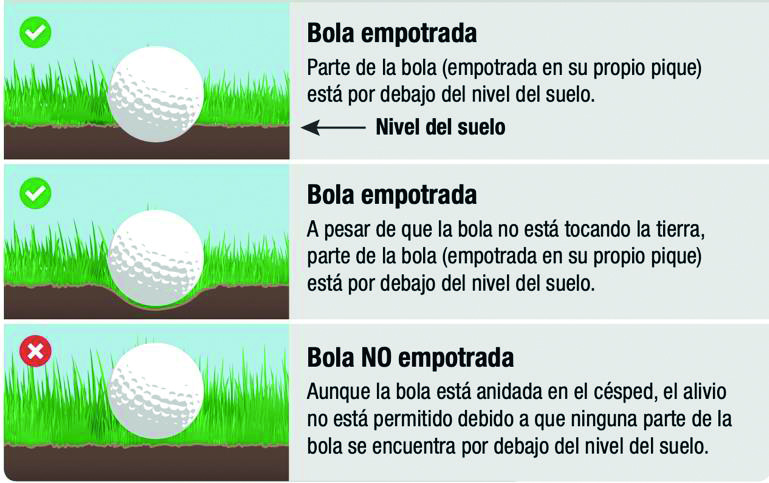
Rule 16.3 tells us that a player's ball is embedded only if:
It's in its own spin, made as a result of the previous blow.
At this point, it's important to emphasize that, firstly, the ball must be in its own spot. It's not acceptable for the ball to be embedded in a spot from a previous stroke in the same area where our ball landed. Furthermore, the Rules don't specify that the ball must be embedded as a result of the first impact, but rather as a consequence of the previous stroke. This means that the ball could rebound violently from its first impact, for example, on a concrete buggy track, and become embedded upon the second impact.
Part of the ball is below ground level.
It is important to note that the ball must be below ground level, having caused a break in the ground, and the typical situation where the ball is stuck in thick or deep rough is not valid.
We must also point out that the Rules, in this specific case of an embedded ball, are generous, because if the player cannot say with certainty whether the ball is in its own spot or a spot made by another ball, the player may treat the ball as embedded if it is reasonable to conclude, in view of the information available, that the ball is in its own spot.
We must keep in mind that a ball is not embedded, even if it is below ground level, as a result of something other than the player's previous stroke. Typical examples of this are when:
The ball is flattened on the ground because someone has stepped on it.,
The ball has embedded itself directly into the ground, without having come through the air, or
The ball becomes embedded when it was dropped while taking relief under a Rule.
When Relief Is Allowed
Once we are certain, according to the Rules, that a ball is embedded, let's see under what conditions we can take relief.
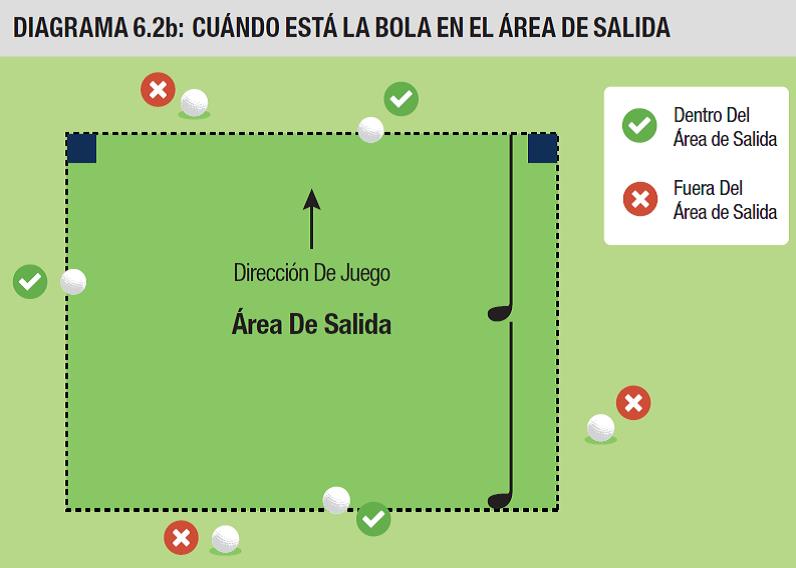
To be eligible for relief, the ball must be embedded in the General Area. The General Area is one of the five defined areas on the field and covers the entire field, except for:
The teeing area, which the player must use when starting the hole they are going to play,
All penalty areas,
All the bunkers, and
The green of the hole the player is playing.
This is the first thing the Rules make clear to us: There is no relief under this Rule if the ball is embedded anywhere other than the General Area.
In the special case where our ball is embedded in the green, we can mark it, lift it and clean it, repair the damage caused by the impact and replace it in its original resting place.
There may be some occasions when our ball is embedded and we are not allowed relief without penalty, the exceptions of which are:
The ball is embedded in sand, on a part of the General Area where the grass is not cut to or below fairway height, or
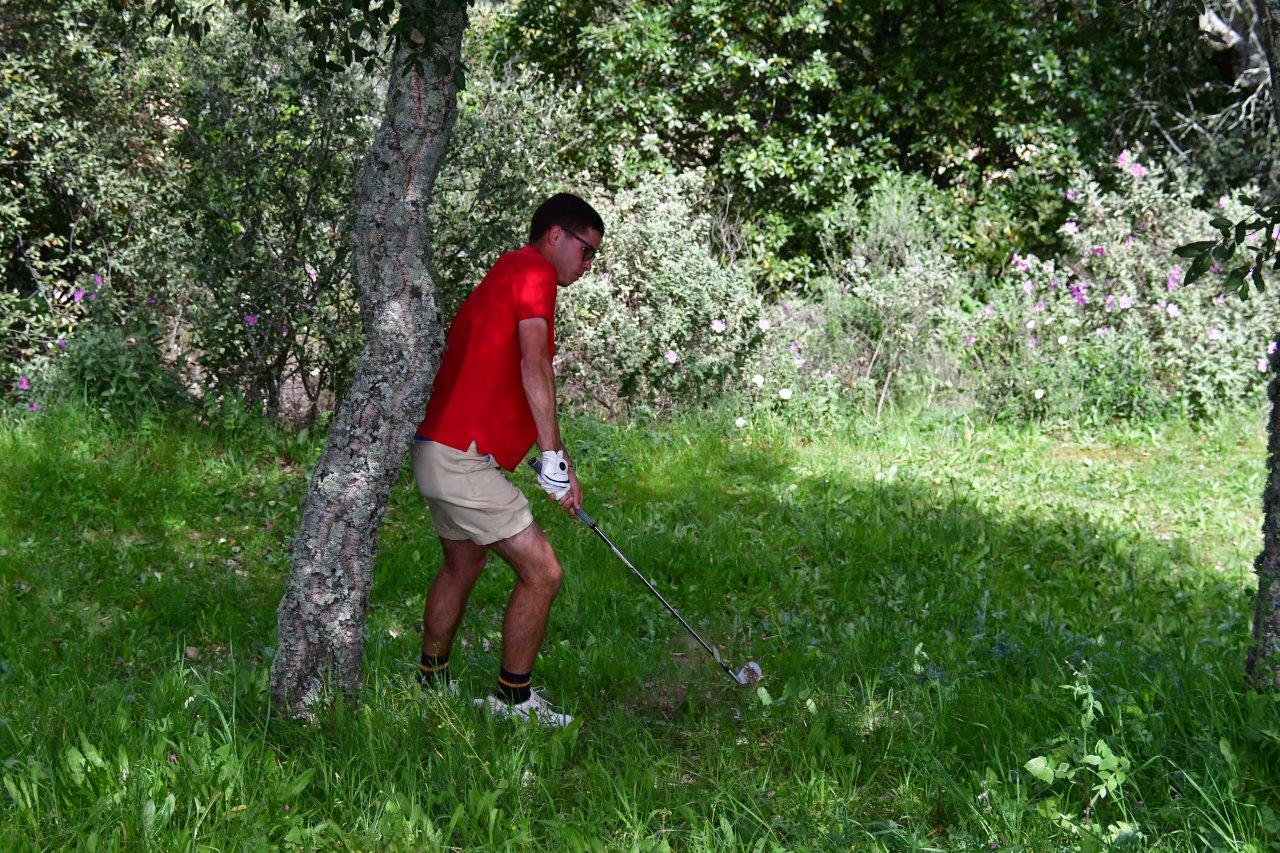
When interference from anything other than the embedded ball makes the shot clearly unreasonable (such as, for example, when we are unable to execute a shot because our ball is embedded next to a bush).
How do I get relief if my ball is embedded?
If the ball is embedded in the General Area and relief is permitted, the player may take relief, without penalty, by dropping the original ball or another ball within a relief area, which is defined as follows:
Reference Point: This will be the point located directly behind where the ball is embedded.
Relief Area Size: We will have an area the length of one stick measured from the reference point.
Note that our relief area must be within the General Area and no closer to the hole than the landmark. We must also consider that when a player is allowed to take relief for an embedded ball, there may be situations where the point immediately behind where the ball is embedded is not within the General Area.
When this occurs, the relief procedure requires the player to determine the nearest point in the general area, and that is no closer to the hole than the point immediately behind where the ball became embedded; this point becomes the reference point for establishing an area of relief under Rule 16.3b.
While this point is normally very close to the spot behind which the ball became embedded, it could be some distance away (such as when a ball becomes embedded just outside a penalty area and, based on the shape of the penalty area, the player would need to go some distance to the right or left to find a spot in the general area that is no closer to the hole).
This procedure also applies when a ball is within bounds, but is embedded right next to out of bounds or when it is embedded in the wall or face directly above a bunker.
Some points to remember
The ball has to
to be embedded in the General Area,
excluding the ball that is in sand, on a part of the General Area that is not cut to the fairway (street) height or lower, or when the situation of the ball makes it clearly unreasonable to make a stroke.
A ball is only considered embedded if it is in its own pocket. It is not valid if it is in the pocket of another ball that was previously embedded.
The ball is considered embedded if it is a result of the previous stroke. It could become embedded after a powerful bounce and still be considered an embedded ball.
It is not considered an embedded ball
that which becomes embedded when stepped on by someone, when embedded directly into the ground, without having come through the air, or when embedded after being dropped when taking relief under a Rule.
If a player reasonably believes that his ball is in a condition from which relief may be taken without penalty under Rules 15.2, 16.1 or 16.3, but cannot decide this without lifting the ball, he may lift it to see if relief is permitted, although he must mark the position before lifting it and must not clean it (except on the putting green).
By Vicente J. Olmos Blázquez
International Referee of the RFEG



-1600x1200.jpg)